
Small Nose Correction in Hyderabad
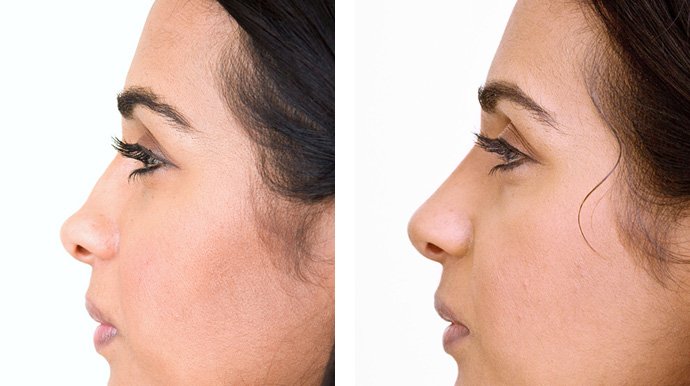
Small Nose Correction (Augmentation Rhinoplasty)
A small, recessed, or under-projected nose—clinically referred to as a hypoplastic nose—can significantly disrupt facial harmony. Augmentation Rhinoplasty is a sophisticated reconstructive procedure designed to increase the nasal dorsal height, tip projection, and structural definition while maintaining natural cephalometric proportions.
At Microcare ENT Hospital & Research Institute, our approach to Functional + Aesthetic Nose Correction ensures that augmenting the nasal framework simultaneously preserves or optimizes the internal nasal valve and overall respiratory function.
India's Top Rhinoplasty Surgeon

Key Anatomical Targets for Augmentation
- Dorsal Augmentation: Increasing the height of the nasal bridge (dorsum) to correct a "flat" profile.
- Tip Projection & Rotation: Enhancing the distance the nasal tip extends from the face to improve the nasolabial angle.
- Radix Augmentation: Adjusting the "starting point" of the nose between the eyes to create a stronger, more defined nasal root.
- Alar Base Refinement: Adjusting the width of the nostrils to balance the newly increased height and projection.
Structural Materials: Autologous vs. Synthetic
To ensure long-term structural stability, our surgeons prioritize the use of autologous grafts (the patient’s own tissue) over synthetic implants, which carry higher risks of infection or extrusion:
- Septal Cartilage: The "gold standard" for minor to moderate augmentation.
- Auricular (Ear) Cartilage: Ideal for shaping the nasal tip and softer contours.
- Costal (Rib) Cartilage: The preferred choice for significant dorsal augmentation, providing maximum volume and structural rigidity.

What is Augmentation Rhinoplasty (Small Nose Correction)?
Small Nose Correction is a specialized reconstructive surgery focused on the volumetric expansion of the nasal framework. It is performed to address deficiencies in the bony-cartilaginous vault that result in an under-projected or “short” nose.
The procedure utilizes structural grafting to achieve the following clinical objectives:
- Increase Nasal Dorsal Height: Elevating a low or "flat" bridge to create a more prominent profile.
- Enhance Midvault Definition: Strengthening the upper lateral cartilages to provide a clear, aesthetic nasal line.
- Optimize Tip Projection & Rotation: Extending the nasal tip further from the facial plane to improve the nasofacials angles.
- Correct a Depressed Nasal Dorsum: Filling in "saddle" depressions often caused by trauma or previous surgery.
- Restore Cephalometric Balance: Creating a proportional relationship between the nose, forehead, and chin.
Clinical Indications for Treatment
Augmentation is typically recommended for patients presenting with:
- Congenital Hypoplasia (small nose): A naturally small or underdeveloped nose due to genetic factors (common in certain ethnic facial profiles).
- Platyrrhine Morphology: Characterized by a flat nasal bridge and wide alar base.
- Nasal Tip Ptosis or Under-projection: A tip that lacks sufficient cartilaginous support, often appearing "blunted."
- Post-Traumatic Structural Collapse: Displacement or "sinking" of the bridge following a severe nasal fracture.
- Iatrogenic Deformity (Over-resected Nose): Correction of a primary rhinoplasty where excessive bone or cartilage removal has resulted in a "scooped" or collapsed appearance.
Why Prioritize Functional + Aesthetic Augmentation?
A small or under-projected nose is frequently more than an aesthetic concern; it is often a marker of structural hypoplasia that can compromise the internal nasal valve and overall airflow. At Microcare ENT Hospital & Research Institute, Centre for Advanced Rhinoplasty & Functional Nose Surgery, we reject “surface-only” fixes in favour of a Bio-Mechanical Realignment.
Our integrated approach focuses on:
- Advanced Functional Rhinoplasty: We address vestibular stenosis (narrowing) that often accompanies a small nasal framework. Increasing the dorsal height can effectively "tent" the skin, opening the airway.
- Structural Autologous Grafting techniques: We utilize costal (rib) or septal cartilage grafts to create a rigid, permanent scaffold. This prevents the "shrink-wrap" effect where skin tension can collapse a weak, newly augmented bridge.
- Physiological Airway Optimization (Improved breathing when required): For patients with a flat bridge, we often find associated turbinate hypertrophy or a deviated septum. Our surgeons correct these concurrently to ensure optimal post-operative patency
- Natural-looking Augmentation: By following cephalometric guidelines, we ensure the augmented height is in harmony with the patient’s ethnic features and facial skeleton, avoiding an "operated" look.
- Long-Term Structural Integrity: Synthetic implants (like silicone) carry a high risk of extrusion or infection. Our use of autologous tissue ensures the nose remains stable, healthy, and integrated for life.
We combine Aesthetic + Functional Nose Surgery principles to deliver safe and predictable outcomes
Who is an Ideal Candidate for Augmentation Rhinoplasty
Determining suitability for Small Nose Correction involves a comprehensive evaluation of both the nasal cutaneous envelope (skin thickness) and the underlying osteocartilaginous framework. At Microcare ENT Hospital, an ideal candidate typically presents with one or more of the following clinical indicators:
- Dorsal Height Deficiency (Have a flat or low nasal bridge): A notably low or "flat" nasal bridge that lacks definition on the mid-sagittal profile.
- Hypoplastic Nasal Pyramid (Feel your nose looks too small for your face): A congenitally small nasal structure that appears disproportionate to the forehead, malar (cheek) bones, and chin.
- Under-projected Nasal Tip (Want improved side profile): A lack of cartilaginous support in the lower lateral cartilages, resulting in a tip that sits too close to the facial plane.
- Secondary Structural Collapse (Had previous rhinoplasty with over-reduction): Patients who have undergone a previous over-resected rhinoplasty, leading to an "inverted-V" deformity or a "saddle nose" appearance.
- Compromised Airway Patency (Have breathing difficulty due to weak nasal support): Breathing difficulties arising from nasal valve collapse, where the small nasal framework lacks the structural rigidity to resist inspiratory pressure.
- Skeletal Maturity (Are above 18 years of age): Candidates must have completed their facial growth phase (typically ages 18 and above) to ensure that the surgical augmentation remains stable and symmetrical over time.
- Psychological Readiness (Have realistic expectations): Individuals with realistic expectations regarding the volumetric limits of their nasal skin and soft tissue envelope.
Types of Small Nose Correction Procedures
At Microcare ENT Hospital & Research Institute, Centre for Advanced Rhinoplasty & Functional Nose Surgery, we utilize advanced structural grafting to address specific volumetric deficits. Each procedure is tailored to the patient’s unique cephalometric profile.

1. Dorsal Augmentation (Bridge Elevation)
This procedure focuses on increasing the vertical height of the nasal dorsum. We utilize Autologous Costal (Rib) Cartilage or Diced Cartilage in Fascia (DCF) to elevate a flat bridge.
- Scientific Goal: To refine the naso-frontal angle and create a distinct, straight dorsal line that harmonizes with the brow-tip aesthetic curve.
2. Apex (Tip) Projection Enhancement
Designed for patients with an under-projected or “blunted” nasal tip. We reconstruct the lobular complex using structural supports such as Columellar Strut Grafts or Septal Extension Grafts.
- Scientific Goal: To increase the distance between the alar base and the nasal tip, improving tip definition and structural rotation.
3. Reconstructive Revision Augmentation
A complex secondary procedure for patients who have suffered from over-resection during a primary “nose job.” This often requires a total “re-building” of the nasal framework.
- Scientific Goal: To restore the L-strut and replace lost bone/cartilage volume to reverse the "scooped" or "saddle nose" appearance.
4. Integrated Functional + Aesthetic Correction
Our signature approach for patients with a small nose and associated internal nasal valve collapse. By augmenting the bridge, we simultaneously “tent” the internal airway.
- Scientific Goal: To reduce nasal airway resistance by expanding the cross-sectional area of the nasal passages while achieving aesthetic height.
Bio-Material Selection for Structural Augmentation
The success of Augmentation Rhinoplasty depends on the choice of “scaffolding” material. At Microcare ENT Hospital, Centre for Advanced Rhinoplasty & Functional Nose Surgery, we prioritize Autologous Chondrocytes (the patient’s own cartilage) to eliminate the risk of immunological rejection and ensure lifelong structural integration.

1. Autologous Septal Cartilage (Primary Choice)
The quadrangular cartilage of the septum is the ideal material for minor to moderate dorsal and tip refinement. It is mechanically strong, naturally straight, and can be harvested through the same incision used for the rhinoplasty.
2. Auricular (Ear) Cartilage
Harvested from the concha cavum, ear cartilage is softer and more pliable. It is clinically preferred for nasal tip contouring and creating a natural, “non-surgical” appearance for the lobular complex.
3. Costal (Rib) Cartilage (The Gold Standard for Major Reconstruction)
For patients requiring significant dorsal height or those undergoing Revision Rhinoplasty, Costal Cartilage is the most reliable material.
- Scientific Advantage: It provides a vast reservoir of rigid tissue required for building a strong L-strut and a high, stable bridge.
- Technique: We utilize "Oblique Split" or "Diced Cartilage" techniques to prevent the cartilage from "warping" over time.
4. Advanced Biocompatible Materials
In rare, selected cases where autologous tissue is insufficient, we may utilize high-grade medical biomaterials. However, we strictly avoid low-quality silicone, preferring materials that allow for tissue ingrowth to minimize the risk of displacement or extrusion.
Autologous cartilage (patient’s own tissue) provides the most natural and stable results
Clinical & Aesthetic Outcomes of Augmentation Rhinoplasty
At Microcare ENT Hospital & Research Institute, Centre for Advanced Rhinoplasty & Functional Nose Surgery, our objective for Small Nose Correction is to achieve a result where increased volume translates into structural health. The primary benefits of our specialized approach include:
- Restoration of Cephalometric Harmony: Aligning the nasal proportions with the forehead, malar (cheek) bones, and chin to create a balanced, symmetrical facial profile.
- Definition of the Nasal Dorsum: Enhancing the "bridge" to create a distinct, straight line that eliminates the "flat" or "recessed" appearance common in hypoplastic cases.
- Enhanced Nasofacial Angles: Optimizing the nasolabial and nasofrontal angles to improve the three-quarter and side profiles, ensuring the nose does not appear "submerged" into the face.
- Bio-Mechanical Airway Patency: For patients with a small framework, augmentation often acts as a "tenting" mechanism, expanding the internal nasal valve and significantly reducing inspiratory resistance.
- Naturalistic Structural Integration: By utilizing autologous (self) cartilage, we avoid the "artificial" look of synthetic implants. The results look, feel, and age naturally with the patient’s own tissues.
- Psychosocial Well-being: Resolving the self-consciousness associated with a "short" or "flat" nose through permanent, long-term structural stability.
- Correction of Over-Resection: For Revision Rhinoplasty patients, this procedure restores the lost volume and "L-strut" support, reversing the functional and aesthetic collapse of previous surgeries.
As a premier centre for Augmentation Rhinoplasty in Hyderabad, Microcare ENT Hospital combines advanced rhinology with aesthetic precision.”
Clinical Surgical Protocol: Augmentation Rhinoplasty
At Microcare ENT Hospital & Research Institute, every Small Nose Correction is treated as a precision reconstructive surgery. Our standardized protocol ensures maximum patient safety and optimal structural integration.
- Surgical Duration: Typically 2 to 4 hours, depending on the complexity of the autologous grafting (e.g., harvesting rib or ear cartilage).
- Anesthesia Management: Performed under Board-Certified General Anesthesia to ensure complete patient comfort and a controlled surgical field.
- Clinical Stay: Most procedures are managed as Day Care or a 24-hour observation stay, depending on the extent of the reconstruction.
- Surgical Access (Technique):
- Open Rhinoplasty: The preferred approach for major augmentation, providing maximum visibility of the nasal pyramid and precise placement of structural grafts (e.g., Spreader or Strut grafts).
- Closed Rhinoplasty: Utilized for minor dorsal enhancements where endonasal incisions are sufficient to create the "pocket" for the graft.
- Incision Closure & Suture Removal: We utilize fine-gauge monofilament sutures for the columella, which are typically removed within 5 to 7 days.
- Internal Stabilization: In cases involving septal reconstruction, internal splints may be used to maintain midline patency during the initial inflammatory phase.
Post-Operative Recovery & Graft Integration Timeline
Recovery from Augmentation Rhinoplasty is a specialized process where the nasal cutaneous envelope (skin and soft tissue) must gradually expand and “shrink-wrap” over the new autologous scaffold.
Phase 1: Initial Consolidation (Days 1–10)
- Clinical Management: A dorsal splint is maintained for 7 days to ensure the cartilage grafts remain precisely aligned.
- Social Downtime: Most patients can return to professional or academic environments within 7 to 10 days, once external sutures and splints are removed.
- Edema Profile: Mild to moderate periorbital edema (swelling) and ecchymosis (bruising) are normal and typically resolve within the first 2 weeks.
Phase 2: Sub-Acute Healing (Weeks 3–6)
- Volume Adjustment: While 80% of major swelling subsides by week 6, the nose may still appear slightly "stiff" or "projected" as the tissues adapt.
- Functional Restoration: Patients with associated airway reconstruction will notice significant improvements in nasal patency during this window.
- Activity Restrictions: Patients must avoid strenuous physical exertion or contact sports for 3 to 4 weeks to prevent displacement of the newly placed bony or cartilaginous grafts.
Phase 3: Long-Term Maturation (Months 3–12)
- Tissue Refinement: The final, refined contour of the bridge and tip becomes increasingly visible between 3 to 6 months.
- Final Result: Complete structural integration and the resolution of all residual micro-swelling typically take up to one full year, resulting in a stable and permanent profile.
Is Small Nose Correction Safe?
Yes. When performed by a board-certified Rhinoplasty & Advanced Nose Surgery Specialist, Augmentation Rhinoplasty is a highly safe and predictable reconstructive procedure. At Microcare ENT Hospital, we minimize surgical risks through a multi-layered safety protocol that prioritizes structural integrity and patient physiology.
Our safety standards include:
- Advanced Structural Grafting: We prioritize autologous cartilage (from the septum, ear, or rib) over synthetic implants. This significantly reduces the risk of immunological rejection, infection, and implant extrusion.
- Precision Pre-Surgical Mapping: Utilizing High-Definition Nasal Endoscopy and Cephalometric Analysis, we create a digital blueprint of your nasal anatomy to ensure that augmentation does not compromise the internal nasal valve.
- Aseptic Surgical Environment: Our specialized theatres follow international sterilization protocols, utilizing HEPA-filtered air and advanced antimicrobial barriers to ensure a sterile operative field.
- Comprehensive Anesthesia Monitoring: All procedures are managed by a dedicated Cardiac/Neuro Anesthesia team, ensuring continuous monitoring of vital parameters throughout the 2–4 hour surgery.
- Structured Post-Operative Surveillance: From initial splint removal to the 12-month maturation phase, our surgeons provide regular follow-ups to monitor graft integration and mucosal healing.
“Our specialized Centre for Advanced Rhinoplasty serves patients seeking permanent results through scientifically designed surgical correction.”
Financial Overview: Cost of Small Nose Correction in Hyderabad
The investment for Augmentation Rhinoplasty is determined by the surgical complexity and the biomaterials required to achieve a stable, lifelong result. At Microcare ENT Hospital & Research Institute, our pricing is transparent and reflects the high level of sub-specialization and advanced technology used in our Centre for Advanced Rhinoplasty.
Factors Influencing the Surgical Fee:
- Anatomic Requirement: Simple dorsal height enhancement versus complex tip projection and rotation.
- Cartilage Source Strategy: Procedures utilizing Autologous Rib Cartilage (Costal Grafting) involve additional surgical time and a second harvest site, whereas Septal or Ear Cartilage may be less intensive.
- Primary vs. Revision Complexity: Correcting a previously "over-resected" nose (Revision cases) often requires extensive structural rebuilding, which is more technically demanding than a primary procedure.
- Functional Integration: Simultaneous correction of Internal Nasal Valve Collapse or a Deviated Septum to optimize breathing.
- Structured Post-Operative Surveillance: From initial splint removal to the 12-month maturation phase, our surgeons provide regular follow-ups to monitor graft integration and mucosal healing.
📞 For personalized cost estimation, book a consultation at Microcare ENT Hospital.
A final quote is provided only after a Digital Photographic & Endoscopic Analysis.
“Providing world-class Functional + Aesthetic Nose Correction for patients across Telangana, Andhra Pradesh, and international medical tourists.”
The Microcare Advantage: A Centre of Excellence in Advanced Rhinoplasty
Choosing the right facility for Augmentation Rhinoplasty is critical to ensuring both an aesthetic profile and a healthy airway. At Microcare ENT Hospital & Research Institute, we offer a level of sub-specialization that distinguishes us as a premier destination for Functional + Aesthetic Nose Correction in South India.
- Dedicated Centre for Advanced Rhinoplasty: Unlike general plastic surgery clinics, we are a specialized Research Institute focusing exclusively on the complex bio-mechanics of the nasal framework and respiratory health.
- Integrated Surgical Expertise: Our lead specialists possess dual expertise in Advanced Otolaryngology (ENT) and Facial Plastic Surgery. This ensures that every "Small Nose Correction" prioritizes internal valve patency alongside external beauty.
- High-Precision Structural Techniques: We exclusively utilize advanced autologous scaffolding (septal, ear, or rib cartilage). By avoiding high-risk synthetic implants, we deliver results with unmatched long-term structural stability.
- State-of-the-Art Surgical Infrastructure: Our Advanced Operation Theatres (OT) are equipped with high-definition endoscopy and precision instrumentation, supported by a dedicated Cardiac/Neuro Anesthesia team for maximum patient safety.
- Ethical & Evidence-Based Care: Every treatment plan is a scientifically designed surgical correction tailored to your specific cephalometric data. We advocate for a conservative, patient-centered approach that prioritizes your biological health.
- Transparent Clinical Value: We provide a clear, transparent cost structure with no hidden charges, ensuring our patients understand the investment in their long-term health and confidence.
“At Microcare, our mission is to deliver a nose that looks natural, feels authentic, and functions perfectly for a lifetime.”

Dr. Sriprakash Vinnakota
MS ENT, HEAD & NECK
CHIEF RHINOPLASTY SURGEON
26+ years of Experience
The ENT Advantage: Why Specialized Expertise Matters in Rhinoplasty
A successful rhinoplasty must achieve a delicate equilibrium between form and function. Because the nose is primarily a complex respiratory organ, the specialized training of an ENT (Otolaryngology) Surgeon provides a distinct advantage in ensuring long-term surgical success.
A successful rhinoplasty must achieve a delicate equilibrium between form and function. Because the nose is primarily a complex respiratory organ, the specialized training of an ENT (Otolaryngology) Surgeon provides a distinct advantage in ensuring long-term surgical success.
At Microcare ENT, Center for Advanced Rhinoplasty & Functional Nose Surgery, our surgical philosophy is rooted in the following four pillars of ENT expertise:
Why Choose Microcare ENT for Your Rhinoplasty?
Selecting the right facility for nasal reshaping surgery is a decision that impacts both your lifelong breathing health and your facial aesthetic. As a premier Centre for Advanced Rhinoplasty & Functional Nose Surgery, Microcare ENT provides a level of precision and safety that sets us apart in the field of facial plastic surgery.

1. Board-Certified ENT & Super Specialised Expertise
Under the leadership of Dr. Sriprakash Vinnakota, our team brings over 26 years of clinical experience to every procedure. We are not just cosmetic surgeons; we are ENT, Head & Neck specialists who understand the deep-seated relationship between nasal form and respiratory function.
2. Dual-Focus Approach: Functional & Aesthetic Harmony
We reject the “one-size-fits-all” model. Every rhinoplasty at Microcare ENT is a customized Septorhinoplasty, ensuring that as we refine your nasal bridge or tip, we simultaneously optimize your airway. We specialize in achieving Natural-Looking Results that never appear “operated on.”
3. Advanced Surgical Technology
We utilize 2026’s gold-standard medical technologies to ensure faster recovery and higher precision:
- Endoscopic Assistance: For clear visualization of internal nasal structures.
- Piezoelectric (Ultrasonic) Tools: To reshape nasal bones with minimal trauma, reducing post-operative bruising and swelling.
- Modern Level-3 Modular OTs: Ensuring a sterile, safe, and controlled surgical environment.
4. Ethical & Patient-Centric Care
At an Advanced Super Speciality level, we adhere to the highest ethical standards. Our protocols include:
- Transparent Consultations: We provide honest assessments of what can be achieved, prioritizing your safety over surgical volume.
- Structured Post-Operative Follow-ups: Comprehensive long-term care to monitor your healing progress for up to a year after surgery.
- Affordable Excellence: Providing world-class super-speciality care with transparent pricing and ethical treatment paths.
Schedule Your Consultation Today
Experience the difference that Advanced Super Speciality expertise makes. Whether you are seeking cosmetic refinement or relief from chronic breathing issues, the Functional & Cosmetic Nose Surgery Specialist team at Microcare ENT Hospital, Hyderabad, is here to help you achieve a balanced, healthy, and confident profile.
Frequently Asked Questions (FAQs): Understanding Rhinoplasty
1. Can a small nose be made bigger (Augmentation)?
Yes. Through Augmentation Rhinoplasty, the nasal dorsal height and tip projection can be significantly enhanced. At Microcare ENT Hospital, we utilize structural cartilage grafting (autologous scaffolding) to increase the volume of the nasal framework, creating a more defined bridge and a balanced facial profile.
2. Will my nose look unnatural after Augmentation Surgery?
No. At Microcare ENT Hospital, our surgical philosophy centres on Facial Harmony and Biomechanical Integration. Rather than simply “adding height,” we utilize Cephalometric Analysis to ensure the new nasal dorsal line and tip projection are in perfect proportion with your forehead, malar (cheek) bones, and chin. By using autologous cartilage (your own tissue) instead of rigid synthetic implants, the augmented nose integrates biologically, moving and aging naturally with your face. The goal is a proportionate enhancement that refines your profile without the tell-tale signs of a “surgical” appearance.
3. Is Small Nose Correction (Augmentation) painful?
The surgical procedure is performed under Board-Certified General Anaesthesia, ensuring a completely painless experience throughout the 2–4 hour surgery. Post-operatively, most patients at Microcare ENT Hospital describe the sensation as “nasal congestion” or “fullness” rather than acute pain. This discomfort is primarily due to internal mucosal swelling and is highly manageable with a prescribed regimen of analgesics and anti-inflammatories. Because we prioritize precision structural techniques, tissue trauma is minimised, leading to a smoother nociceptive recovery. If Costal (Rib) Cartilage is harvested, mild soreness at the donor site may be felt for 3–5 days, which typically resolves with standard clinical care and light walking.
4. How long does post-operative swelling (Edema) last?
The resolution of post-surgical edema follows a specific physiological timeline. Most macroscopic swelling and periorbital ecchymosis (bruising) subside significantly within 3 to 4 weeks, at which point the primary structural changes become visible. However, Augmentation Rhinoplasty involves a unique “shrink-wrap” effect, where the nasal cutaneous envelope must adapt to the newly increased underlying volume. While the majority of the swelling reduces by the 6th week, sub-clinical edema—especially in the nasal tip—takes longer to dissipate. The final refined results and definitive contours typically emerge between 3 to 6 months, with subtle maturation of the structural grafts continuing for up to one full year.
5. What are the clinical risks associated with Augmentation Rhinoplasty?
While Small Nose Correction is highly safe when performed by a specialized Rhinoplasty & Advanced Nose Surgery Specialist, it is a complex reconstructive procedure. Potential clinical risks include transient post-operative edema (swelling), minor asymmetry during the healing phase, or localized infection. In rare cases, graft visibility or “warping” (especially with certain cartilage types) may occur as the nasal cutaneous envelope contractures over the new framework.
However, at Microcare ENT Hospital, we significantly mitigate these risks by prioritizing autologous structural grafting (using your own tissue) over synthetic implants, which eliminates the risk of implant extrusion or rejection. Utilizing Precision Surgical Planning and High-Definition Endoscopy further reduces the statistical probability of needing a secondary Revision Rhinoplasty.
6. Is Augmentation Rhinoplasty (Small Nose Correction) covered by insurance?
Typically, purely elective procedures for aesthetic enhancement are not covered by standard health insurance policies. However, if the Small Nose Deformity is associated with a functional airway deficit—such as Internal Nasal Valve Collapse or a Deviated Nasal Septum—partial coverage may be applicable under Reconstructive Septorhinoplasty.
At Microcare ENT Hospital & Research Institute, we provide a comprehensive Diagnostic Nasal Endoscopy to document any structural obstructions. If your surgery involves correcting respiratory resistance or repairing a post-traumatic deformity, our billing department can assist in coordinating with your TPA (Third Party Administrator) to determine if your specific policy covers the functional components of the procedure.
7. When can I return to professional activities after surgery?
Most patients at Microcare ENT Hospital are clinically fit to return to routine professional or academic activities within 7 to 10 days. This timeline coincides with the removal of the dorsal nasal splint and external monofilament sutures. While periorbital ecchymosis (bruising) and macroscopic edema (swelling) are typically resolving by this stage, the nasal framework remains in a delicate phase of graft integration. Therefore, while sedentary work is permissible, patients must avoid environments with high dust exposure or physical risk. Furthermore, strenuous physical exertion or Valsalva-inducing activities (heavy lifting) should be deferred for at least 3 to 4 weeks to prevent post-operative epistaxis or displacement of the newly reconstructed L-strut.
8. Is revision surgery possible if I am unsatisfied with the initial result?
Yes, Revision Rhinoplasty is possible and is a specialized sub-focus at our Center for Advanced Rhinoplasty. However, it is clinically mandatory to allow for complete cicatrization (scar maturation) and the total resolution of post-operative edema, which typically requires 9 to 12 months. Revision cases are significantly more complex due to the presence of fibrosis (scar tissue) and altered anatomical landmarks. These procedures often require Advanced Autologous Reconstructive techniques, such as harvesting Costal (Rib) Cartilage, to restore the structural integrity of a previously compromised nasal framework. At Microcare ENT Hospital & Research Institute, we utilize high-definition diagnostic endoscopy to assess internal scarring before planning any secondary corrective intervention.
Watch our Related Videos
Explore Our Related Blogs
Medically Reviewed By:
Dr. Sriprakash Vinnakota, MBBS, MS ENT, Head & Neck
Rhinoplasty & Advanced Nose Surgery Specialist
Chief Rhinoplasty Surgeon with 26+ Years of Experience
Microcare ENT Hospital & Research Institute– Centre for Advanced Rhinoplasty & Functional Nose Surgery
Reviewed on: January 18, 2026