
Nose Tip Deformity Correction in Hyderabad
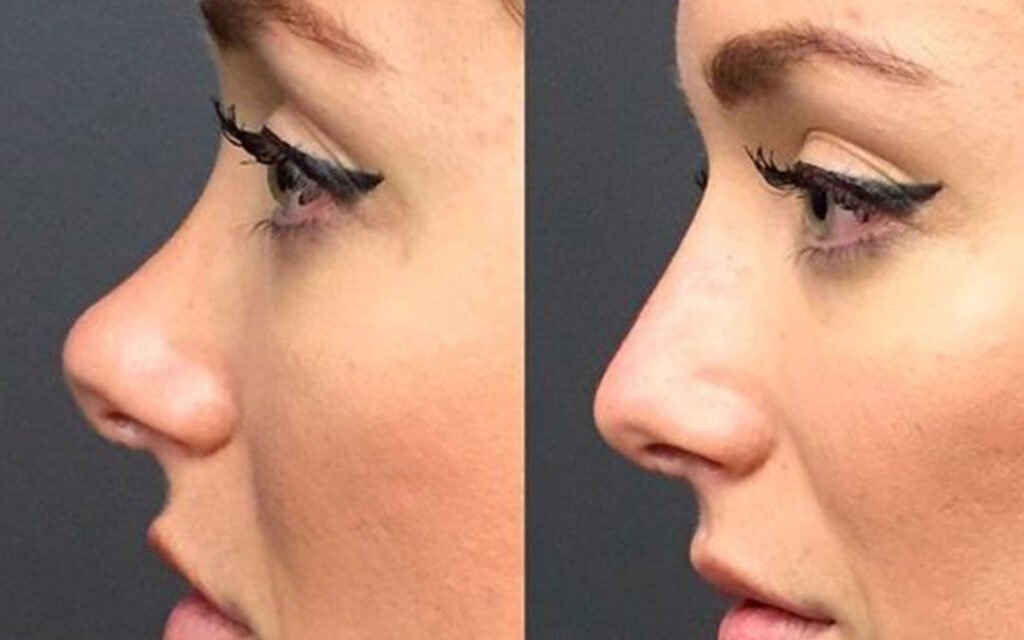
Refine Your Profile with Precision Tip Correction
Address bulbous, droopy, or asymmetrical tips through advanced structural techniques that prioritize both aesthetic elegance and long-term breathing stability
✅ Natural-Looking Results
✅ Preserves Nasal Function
✅ Scar-Minimal Techniques
India's Top Rhinoplasty Surgeon

WHAT IS NOSE TIP DEFORMITY?
What is Nose Tip Deformity?
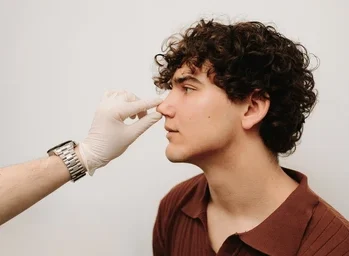
Nose Tip Deformity refers to abnormal shape, projection, rotation, width, or symmetry of the nasal tip caused by cartilage irregularities, congenital factors, trauma, or previous surgery.
Common Tip Concerns:
- Bulbous Tip: Excessive width or a "rounded" appearance.
- Droopy (Ptotic) Tip: A tip that points downward, often making the nose look long.
- Bifid Tip: A visible "cleft" or gap between the tip cartilages.
- Over-Projected: A tip that sticks out too far from the face (the "Pinocchio" effect).
The nasal tip plays a crucial role in:
- Facial balance
- Nasal breathing
- Profile aesthetics
- Smile harmony
Even minor tip irregularities can significantly affect facial appearance. Nose tip shape is directly tied to the strength of the Nasal Valve, which is the narrowest part of the airway. https://www.ncbi.nlm.nih.gov/books/NBK558970/
Correct the ‘plunging’ effect where the tip drops during smiling, restoring your confidence in every photo.
“Not sure which type of tip deformity you have? Upload a Photo for a Preliminary Analysis“
TYPES OF NOSE TIP DEFORMITIES
Precision Correction for Every Profile
1. The Droopy or "Plunging" Tip (Ptotic Tip)
- The Issue: The tip falls downward, often making the nose look elongated or "hooked," especially when smiling.
- The Correction: We use Columellar Strut Grafts to provide a permanent "scaffold," ensuring the tip stays elevated and youthful.
2. The Wide or "Heavy" Tip (Bulbous & Boxy)
- The Issue: Excessive width or thick, rounded cartilage that lacks definition.
- The Correction: Through Cephalic Trim or Interdomal Sutures, we refine the cartilage angles to create a slimmer, more "chiseled" appearance.
3. Structural & Congenital Irregularities (Bifid & Asymmetric)
- The Issue: A visible central groove (Bifid), uneven nostrils, or leaning cartilage.
- The Correction: We realign and "equalize" the lower lateral cartilages to restore perfect symmetry and a smooth surface.
4. Projection Issues (Over-Projected or Under-Projected)
- The Issue: The tip either protrudes too far from the face ("Pinocchio" effect) or looks "flat" and unsupported.
- The Correction: We use Tip Recession techniques to bring the nose back or Tip Grafts to add the necessary height and "pop."
5. The Pinched or Failed Tip (Revision Cases)
- The Issue: A "collapsed" look often caused by aggressive previous surgery.
- The Correction: This requires Complex Revision Rhinoplasty, using cartilage grafts to restore the structural integrity and open the airway for better breathing.
WHY TIP CORRECTION IS COMPLEX
The Balance of Form and Function
The nasal tip isn’t just about looks—it is the “gatekeeper” of your airway. Because it is supported by delicate lower lateral cartilages, even a 1mm error can lead to lifelong complications.
The Risks of "Cookie-Cutter" Surgery:
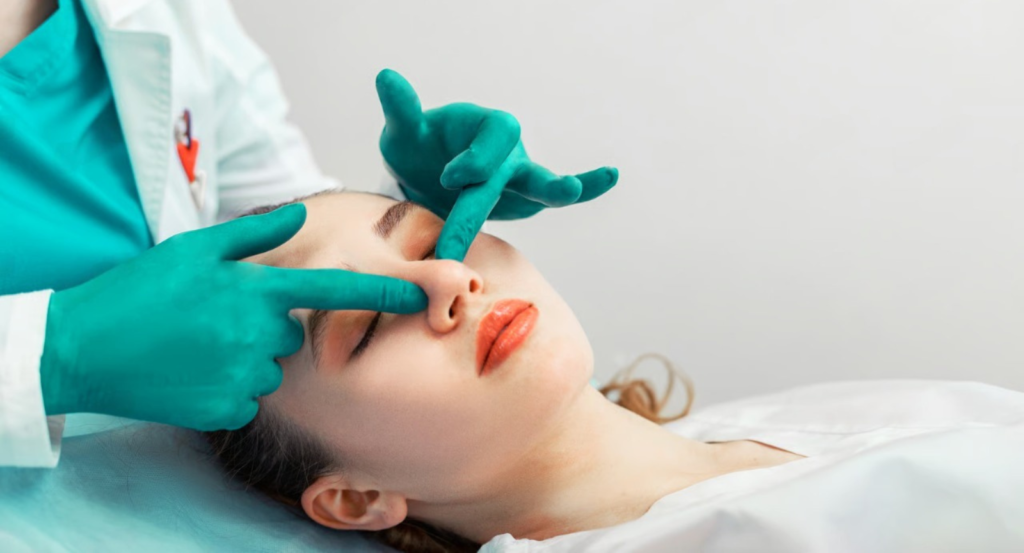
Over-resection (removing too much tissue) by inexperienced surgeons can lead to:
- Internal Valve Collapse: Your nostrils "pinch" shut when you breathe in.
- The "Operated" Look: Sharp, unnatural edges or a "pig-snout" appearance.
- Structural Weakness: A tip that droops further as you age.
THE MICROCARE ADVANTAGE: STRUCTURAL PRECISION
At Microcare ENT Hospital & Research Institute, we don’t just “cut”—we rebuild. Our Centre for Advanced Rhinoplasty utilizes Structural Tip Rhinoplasty to ensure your new look lasts a lifetime.
- Cartilage Preservation: We keep as much of your natural anatomy as possible to maintain structural integrity.
- Advanced Suture Sculpting: We use microscopic suturing to "fold" and shape cartilage rather than removing it.
- Autologous Graft Support: Using your own septal or ear cartilage to create a "permanent scaffold" for the tip.
- Dual-Specialty Focus: As a premier ENT institute, we guarantee that your Functional Airway is protected or improved.
This ensures both Aesthetic + Functional Nose Correction.
The ENT Edge
We understand both the internal airway and external aesthetics of the nose.
Surgery planned for long-term breathing + natural results.
Hospital-Based Precision
Microcare ENT Hospital & Research Institute
Advanced infrastructure. Evidence-based protocols.
Safety-first rhinoplasty care.
ARE YOU A CANDIDATE FOR TIP PLASTY?
Personalized Refinement for Every Profile
You are likely an ideal candidate if you identify with one or more of the following:
1. Aesthetic Concerns
- The "Plunging" Tip: Your nose tip drops significantly when you smile or talk.
- Lack of Definition: You feel your nose is "bulbous," "boxy," or lacks a clear, refined point.
- Profile Imbalance: Your tip protrudes too far (over-projected) or appears "flat" against your face.
- Asymmetry: Your nostrils or the tip itself looks uneven or tilted to one side.
2. Functional & Corrective Needs
- Structural Breathing Issues: Your nostrils "collapse" or feel restricted when you breathe in deeply.
- Post-Traumatic Changes: Your tip shape changed following an injury or accident.
- Revision Requirements: You are unhappy with the results of a previous rhinoplasty (e.g., a "pinched" or "upturned" look).
Medical Checklist for Success
To ensure the best surgical outcome at Microcare ENT Hospital, candidates should also meet these criteria:
- Nasal Maturity: Your nose has finished growing (typically age 16+ for females, 17+ for males).
- Realistic Expectations: You are looking for improvement and harmony, not "perfection" or a celebrity's nose.
- Overall Health: You are in good general health and a non-smoker (or willing to quit 2-4 weeks before surgery to ensure proper healing).
THE SURGICAL JOURNEY: PRECISION REDEFINED
A Step-by-Step Look at Your Transformation
Step 1 – Advanced Clinical Assessment
We don’t just look at the skin; we analyze the “engine.”
- Cartilage Strength Analysis: Determining if your natural support is weak or excessive.
- Facial Proportion Study: Ensuring the new tip fits your forehead, chin, and lips.
- Airway Evaluation: Using ENT-grade diagnostics to ensure your breathing is optimized.
Step 2 – Photographic Planning & Simulation
Visualise your results before the first incision.
- High-Resolution Mapping: We use digital tools to plan the exact angles.
- Dynamic Assessment: We analyze your nose at rest and while smiling to ensure a natural look in motion.
Step 3 – Structural Tip Refinement
We use a “preservation-first” approach. Depending on your needs, we utilize:
- Cartilage Suturing: Reshaping existing tissue for a slimmer look.
- Conservative Trimming: Removing only what is necessary to maintain strength.
- Advanced Grafting: Using Columellar Struts, Shield Grafts, or Alar Rim Grafts (using your own natural septal cartilage) to build a permanent, non-drooping structure.
Step 4 – Functional Stabilization
This is where our ENT expertise shines. We reinforce the Internal Nasal Valve to ensure that while your nose looks better, it also breathes better than ever before.
QUICK SURGERY FACTS
⏱️ Duration: 1.5 – 3 hours (depending on complexity).
😴 Anesthesia: Board-certified General Anesthesia for maximum safety and comfort.
🏥 Hospital Stay: Day Care Procedure. Most patients return home the same evening.
🩹 Recovery: Most patients return to social activities within 7–10 days.
YOUR RECOVERY TIMELINE
What to Expect After Your Procedure
Recovery from Tip Plasty is significantly faster than a full rhinoplasty because the nasal bones are usually left untouched.
Week 1: The "Social" Recovery
- Activity: You can return to work or social engagements within 5–7 days.
- Care: The small external splint and internal sutures are typically removed by Day 7.
- Appearance: Mild swelling is normal; bruising is usually minimal or non-existent in tip-only cases.
Weeks 2–4: Heading Back to Routine
- Initial swelling subsides rapidly.
- You may resume light exercise.
- The “operated” look disappears, and you begin to see your new profile.
Months 3–6: The Refinement Phase
- While the bridge of the nose heals quickly, the tip is the last part to settle.
- Residual “firmness” or minor swelling at the tip will gradually dissipate.
- Your final, “chiseled” definition becomes visible by month 6 to 9.
The “Zero Pain” Assurance: most patients describe the recovery as “congested” rather than “painful.”
POST-OPERATIVE CARE TIPS
- Sleep Elevated: Use two pillows for the first 3 nights to minimize swelling.
- Avoid Pressure: No heavy glasses or sunglasses directly on the tip for 3 weeks.
- Sun Protection: Keep the tip protected with SPF to ensure the fine incisions heal invisibly.
- Follow-up: Attend all scheduled sessions at Microcare ENT Hospital to monitor your structural healing.
TRANSPARENT PRICING & VALUE
Understanding the Cost of Nose Tip Correction in Hyderabad
The cost of a precision Tip Plasty is an investment in both your confidence and your breathing health. At Microcare ENT, we believe in transparent, all-inclusive pricing without hidden “hospital charges.”
Why Costs Vary:
The cost of a precision Tip Plasty is an investment in both your confidence and your breathing health. At Microcare ENT, we believe in transparent, all-inclusive pricing without hidden “hospital charges.”
- Complexity of Deformity: A simple narrowing of a bulbous tip vs. a complex reconstruction of a "pinched" tip.
- Structural Grafting: The need for harvesting your own septal or ear cartilage to provide long-term support.
- Primary vs. Revision: Correcting a previous surgeon’s work (Revision) requires higher expertise and more surgical time.
- Functional Integration: If we are simultaneously fixing a deviated septum or opening the nasal valve to improve breathing.
OUR COMMITMENT TO YOU
During your Initial Advanced Nasal Analysis, our specialists will provide:
- A Detailed Surgical Roadmap: Exactly what needs to be done.
- Digital Simulations: Visualising the expected outcome.
- A Clear, All-Inclusive Quote: Covering surgery, anesthesia, day-care stay, and follow-up care.
At Microcare ENT Hospital & Research Institute, Centre for Advanced Rhinoplasty & Functional Nose Surgery you aren’t just paying for a cosmetic change; you are paying for the safety of a Centre of Excellence with 26+ years of experience.

Dr. Sriprakash Vinnakota
MS ENT, HEAD & NECK
CHIEF RHINOPLASTY SURGEON
26+ years of Experience
The ENT Advantage: Why Specialized Expertise Matters in Rhinoplasty
A successful rhinoplasty must achieve a delicate equilibrium between form and function. Because the nose is primarily a complex respiratory organ, the specialized training of an ENT (Otolaryngology) Surgeon provides a distinct advantage in ensuring long-term surgical success.
A successful rhinoplasty must achieve a delicate equilibrium between form and function. Because the nose is primarily a complex respiratory organ, the specialized training of an ENT (Otolaryngology) Surgeon provides a distinct advantage in ensuring long-term surgical success.
At Microcare ENT, Center for Advanced Rhinoplasty & Functional Nose Surgery, our surgical philosophy is rooted in the following four pillars of ENT expertise:
WHY CHOOSE DR. SRIPRAKASH VINNAKOTA?
The Gold Standard in Rhinoplasty & Functional Nose Surgery
Choosing a surgeon for your nose is a decision that lasts a lifetime. At Microcare ENT Hospital & Research Institute, Centre for Advanced Rhinoplasty & Functional Nose Surger
you are under the care of one of India’s most respected specialists in nasal architecture.
🏆 26+ Years of Surgical Mastery
With over two decades of dedicated experience, Dr. Sriprakash Vinnakota has performed thousands of complex nasal surgeries, blending artistic refinement with medical precision.
🩺 The ENT Advantage: Functional + Cosmetic Expert
Unlike general plastic surgeons, Dr. Vinnakota is an ENT specialist. He ensures that your nose doesn’t just look beautiful on the outside but functions perfectly on the inside. No compromise on breathing.
🏗️ Pioneer of Structural Rhinoplasty
We don’t use “quick-fix” reduction methods. We use advanced Structural Techniques—building a permanent framework using your own tissue so your results never “collapse” or droop over time.
🔄 The Revision Specialist
Dr. Vinnakota is a sought-after expert for Revision Rhinoplasty, correcting failed or unsatisfactory results from previous surgeries with a high success rate.
🔬 A Center of Excellence
As part of the Microcare ENT Hospital & Research Institute, our facility is equipped with global-standard technology, ensuring the highest safety protocols and predictable outcomes.
Why Choose Microcare ENT for Your Rhinoplasty?
Selecting the right facility for nasal reshaping surgery is a decision that impacts both your lifelong breathing health and your facial aesthetic. As a premier Centre for Advanced Rhinoplasty & Functional Nose Surgery, Microcare ENT provides a level of precision and safety that sets us apart in the field of facial plastic surgery.

1. Board-Certified ENT & Super Specialised Expertise
Under the leadership of Dr. Sriprakash Vinnakota, our team brings over 26 years of clinical experience to every procedure. We are not just cosmetic surgeons; we are ENT, Head & Neck specialists who understand the deep-seated relationship between nasal form and respiratory function.
2. Dual-Focus Approach: Functional & Aesthetic Harmony
We reject the “one-size-fits-all” model. Every rhinoplasty at Microcare ENT is a customized Septorhinoplasty, ensuring that as we refine your nasal bridge or tip, we simultaneously optimize your airway. We specialize in achieving Natural-Looking Results that never appear “operated on.”
3. Advanced Surgical Technology
We utilize 2026’s gold-standard medical technologies to ensure faster recovery and higher precision:
- Endoscopic Assistance: For clear visualization of internal nasal structures.
- Piezoelectric (Ultrasonic) Tools: To reshape nasal bones with minimal trauma, reducing post-operative bruising and swelling.
- Modern Level-3 Modular OTs: Ensuring a sterile, safe, and controlled surgical environment.
4. Ethical & Patient-Centric Care
At an Advanced Super Speciality level, we adhere to the highest ethical standards. Our protocols include:
- Transparent Consultations: We provide honest assessments of what can be achieved, prioritizing your safety over surgical volume.
- Structured Post-Operative Follow-ups: Comprehensive long-term care to monitor your healing progress for up to a year after surgery.
- Affordable Excellence: Providing world-class super-speciality care with transparent pricing and ethical treatment paths.
Schedule Your Consultation Today
Experience the difference that Advanced Super Speciality expertise makes. Whether you are seeking cosmetic refinement or relief from chronic breathing issues, the Functional & Cosmetic Nose Surgery Specialist team at Microcare ENT Hospital, Hyderabad, is here to help you achieve a balanced, healthy, and confident profile.
Frequently Asked Questions (FAQs): Understanding Rhinoplasty
Is Nose Tip Correction Different from Full Rhinoplasty?
Yes. While a full rhinoplasty reshapes the entire nose (including the bony bridge), Tip Rhinoplasty (Tip-Plasty) is a specialized procedure focusing exclusively on the lower third of the nasal structure.
Feature | Nose Tip Correction (Tip-Plasty) | Full Rhinoplasty |
Focus Area | Nasal tip, nostrils, and columella. | Bridge, bone, width, and tip. |
Bone Work | No. No “breaking” of nasal bones. | Yes. Reshaping the bony “hump” or width. |
Complexity | Targeted & Structural. | Comprehensive Reconstruction. |
Recovery | Fast (5–7 days). Minimal bruising. | Standard (10–14 days). Common bruising. |
Anesthesia | Local with sedation or General. | Usually General Anesthesia. |
Why “Structural Planning” Still Matters
Even though we aren’t touching the bridge, Dr. Sriprakash Vinnakota emphasizes that the tip is the most complex part of the nose. At Microcare ENT Hospital, we treat Tip Correction with the same surgical rigor as a full rhinoplasty because:
- Support is Key: The tip must support the weight of the entire nasal skin.
- Airway Health: The tip forms the “Internal Nasal Valve.” If not planned correctly, a cosmetic tip change can ruin your breathing.
- Facial Balance: The tip must be perfectly “rotated” and “projected” to match your existing nasal bridge.
Will My Nose Look Artificial?”
No. Our goal is a nose that looks like you were born with it—only better.
At Microcare ENT Hospital, we follow the philosophy of “Natural Refinement.” We avoid the “pinched,” “upturned,” or “razor-thin” look that often characterizes poorly performed surgeries.
How We Ensure a Natural Result:
- Proportional Analysis: Dr. Sriprakash Vinnakota uses your forehead, lips, and chin as a guide. A nose tip should never exist in isolation; it must harmonize with your unique facial features.
- Cartilage Sculpting vs. Removal: Older techniques relied on “cutting away” cartilage, which creates an artificial, collapsed look over time. We use Suture Reshaping to fold and mold your natural tissue into a more elegant shape.
- The “Smile Test”: We plan your surgery so the tip remains stable and looks natural even during dynamic movement (laughing and smiling), preventing the “plunging” effect without making it look “stiff.”
- No “Cookie-Cutter” Results: Every tip we design is bespoke. Whether you need a bulbous tip narrowed or a droopy tip lifted, the result is tailored to your ethnic anatomy and personal aesthetic goals.
The “Un-Operated” Guarantee
Our definition of success is when people notice you look better, but cannot tell you had surgery. By utilizing structural grafts from your own body, we maintain the soft, natural contours of a real nose.
“The best rhinoplasty is the one that no one knows happened.” — Dr. Sriprakash Vinnakota
Expert Insight: You can view our Before & After Gallery to see real-world examples of natural, balanced transformations.
Is Nose Tip Surgery Painful?”
No. Most patients are surprised to find that Tip Correction is much more comfortable than they anticipated.
Because Tip-Plasty focuses on the cartilage and soft tissue rather than the nasal bone, the “throbbing” pain associated with traditional rhinoplasty is largely avoided.
What You Will Actually Feel:
- The “Congestion” Sensation: For the first 2–3 days, you will feel like you have a “heavy cold” or a stuffed nose. This is due to internal swelling, not surgical pain.
- Minimal Discomfort: Any post-operative soreness is typically mild and is easily managed with standard oral medications provided by our team.
- Pressure, Not Pain: You may feel a “tightness” at the tip of your nose as it begins to heal and the skin adapts to its new shape.
The Microcare Comfort Protocol:
At Microcare ENT Hospital, we use specialized techniques to ensure your comfort:
- Gentle Surgical Handling: Dr. Sriprakash Vinnakota uses microscopic precision to minimize tissue trauma.
- Advanced Anesthesia: Our board-certified anesthesiologists use modern “TIVA” (Total Intravenous Anesthesia) or balanced techniques to ensure you wake up without nausea or pain.
- No Painful Packings: Unlike old-fashioned methods, we use advanced internal splints or no packing at all whenever possible, allowing you to breathe more easily immediately after surgery.
Patient Note: Most of our patients report that they stopped taking pain relievers entirely within 48 hours of the procedure.
How Long Does Swelling Last?
While you will look “socially ready” within 2 weeks, your nose will continue to refine and “shrink-wrap” for up to a year.
Because the skin at the nasal tip is thicker and has more sebaceous glands than the bridge, it is always the last part of the nose to show its final shape.
The Healing Phases:
- The “Social” Phase (Days 7–14):
Once the splint is removed at Microcare ENT Hospital, you will have “major” swelling. However, to a casual observer, you will simply look like you have a slightly “stuffy” nose. Most patients feel confident in public by Day 10. - The “Substantial” Reduction (Weeks 3–6):
About 70–80% of the surgical swelling dissipates during this time. Your profile will already look significantly improved, and you will begin to see the new angles of your tip. - The “Definition” Phase (Months 3–12):
The final 10–20% of swelling is “micro-swelling.” It fluctuates—it might be more noticeable in the morning or after salty food. As this fades, the skin “shrink-wraps” around the new cartilage structure, revealing the sharp, refined definition you desire.
Expert Tip for Faster Healing:
At Microcare ENT Hospital, we provide specific post-operative instructions to help speed up this process:
- Low-Sodium Diet: Helps prevent fluid retention in the nasal tissues.
- Taping: We may show you how to “tape” your nose at night during the first month to maintain pressure and reduce swelling.
- No High-Impact Exercise: Avoiding heavy lifting for 3–4 weeks prevents blood pressure spikes that can increase swelling.
Note: Patients with “thick skin” types may take slightly longer (up to 18 months) for the final tip definition to emerge. Dr. Sriprakash Vinnakota will assess your skin type during your Advanced Nasal Analysis to give you a personalized timeline.
Can Breathing Worsen After Tip Surgery?
No—not when performed correctly. In fact, with our specialized ENT approach, many patients find their breathing actually improves after tip correction.
Why Breathing Stays Safe (or Gets Better) at Microcare:
- The “Structural” Difference: Old-fashioned “reduction” rhinoplasty involved cutting away cartilage, which often caused the nostrils to “collapse” when breathing in. At Microcare, we use Structural Techniques—adding support grafts (like Alar Rim Grafts) to ensure your airway remains wide and rigid.
- Internal Nasal Valve Support: The nasal tip is the “gatekeeper” of your airflow. Dr. Sriprakash Vinnakota specifically reinforces the Internal Nasal Valve during surgery. This prevents the “pinched” look and the breathing difficulties that often follow amateur cosmetic procedures.
- Dual-Action Surgery: Because we are a Centre for Advanced ENT Surgery, we evaluate your internal anatomy (like the septum and turbinates) before the first incision. If you have a hidden breathing obstruction, we can often correct it simultaneously with your tip refinement.
The “ENT Assurance” for Your Airway
Unlike a general plastic surgeon, an Otolaryngologist (ENT Specialist) is an expert in the internal plumbing of the nose.
- ✔ Airway First: Our philosophy is that a nose must function perfectly before it can be considered “beautiful.”
- ✔ No “Collapsing” Tips: We use your own septal cartilage to build a “permanent scaffold” that keeps your nostrils open for life.
Expert Verification: You can learn more about how structural grafts protect your breathing from the Association of Otolaryngologists of India (AOI), which highlights the importance of functional stability in nasal surgery.
- 1 Month: Approximately 70% of the swelling is gone.
- 3–6 Months: The bridge and mid-vault area reach their near-final shape.
- 12 Months: The nasal tip—which has the thickest skin—completes its final "shrink-wrap" and refinement.
Is Revision Tip Surgery Possible?
Yes. At Microcare ENT Hospital, we specialize in “Rescue Rhinoplasty.” Correcting a previous surgery is more complex, but with advanced structural techniques, we can restore both the appearance and the function of your nose.
Common Revision Issues We Resolve:
- The “Pinched” Tip: Caused by excessive removal of cartilage in a previous surgery, leading to breathing collapse.
- The “Pollybeak” Deformity: Where a bump remains or forms just above the tip.
- The “Pig-Snout” Look: An over-rotated tip that shows too much nostril.
- Asymmetry & Notching: Uneven results or “dents” that appeared during the healing process of the first surgery.
The Microcare Revision Approach:
Revision surgery requires more than just “re-shaping”—it requires re-building.
- Cartilage Restoration: Since the original nasal cartilage may be missing, we often use Autologous Grafts (taken from the ear or rib) to provide the necessary material to reconstruct a natural shape.
- Scar Tissue Management: Our advanced microsurgical techniques allow us to navigate and remove internal scar tissue from previous operations carefully.
- Functional Restoration: We prioritize opening the airway if your previous surgery resulted in “Nasal Valve Collapse.”
Expert Insight: Revision surgery is best performed at least 12 months after your original procedure to ensure all initial swelling has subsided. The Indian Association of Aesthetic Plastic Surgeons (IAAPS) recommends choosing a specialist with extensive experience specifically in secondary rhinoplasty for these cases.
Watch our Related Videos
Explore Our Related Blogs
Medically Reviewed By:
Dr. Sriprakash Vinnakota, MBBS, MS ENT, Head & Neck
Rhinoplasty & Advanced Nose Surgery Specialist
Chief Rhinoplasty Surgeon with 26+ Years of Experience
Microcare ENT Hospital & Research Institute– Centre for Advanced Rhinoplasty & Functional Nose Surgery
Reviewed on: January 18, 2026