
Broad Nose Correction in Hyderabad
Refine. Reshape. Restore Natural Facial Balance.
A broad nose—clinically characterized by an increased intercanthal width or a widened nasal base—can disrupt the vertical proportions of the face. Broad Nose Correction is a sophisticated surgical intervention designed to narrow the nasal pyramid, refine the lobular complex, and optimize the alar-facial groove to achieve a more harmonious and defined appearance.
At Microcare ENT Hospital & Research Institute, our surgeons utilize Precision Osteotomies and Alar Base Contouring to reduce width while meticulously preserving the patient’s natural ethnic identity and physiological airway patency.
India's Top Rhinoplasty Surgeon

Types of Broad Nose (Clinical Classification of Broad Nose Deformities)
A broad nose is rarely a uniform issue; it usually involves specific osteocartilaginous components that exceed ideal cephalometric proportions. At Microcare ENT Hospital & Research Institute, we categorize these deformities to provide a targeted surgical solution.
1. Broad Bony Vault (Upper Third, wide nasal bones)
This involves an excessive lateral distance between the nasal bones and the frontal process of the maxilla. It creates a “heavy” appearance in the upper face.
- Correction: Medial and Lateral Osteotomies. We perform precise, controlled fractures to reposition the bony walls toward the midline, narrowing the nasal bridge.
2. Broad Middle Vault (Mid-section, wide nasal bridge)
Characterized by a widened cartilaginous vault where the upper lateral cartilages splay outward. This often results in a “flat” appearance on the frontal view.
- Correction: Structural Reshaping & Spreader Sutures. We use tension-adjusting sutures to bring the mid-vault cartilages into a more vertical, narrowed orientation.
3. Bulbous / Broad Tip (Lower Third)
A bulky or undefined tip is usually caused by excessive volume or divergence of the lower lateral cartilages (LLC).
- Correction: Cephalic Trim & Suture Techniques. By removing a specific portion of the LLC and using interdomal sutures, we refine the "tip-defining points" for a slimmer, more elegant contour.
4. Wide Alar Base (Alar Flare, Broad Nostrils)
Excessive width at the base where the nostrils meet the facial plane. This is often prominent during smiling (dynamic flare).
- Correction: Alar Base Cinch or Wedge Resection. Utilizing the Weir Technique, we remove a small segment of tissue at the alar-facial groove to reduce the overall nasal width without leaving visible external scars.
5.Integumentary Factors (thick skin with poor tip definition):
Thick sebaceous skin that can mask the underlying cartilaginous definition, requiring specialized thinning techniques
Many patients require a combination approach for optimal results.

Precision Surgical Pathway for Broad Nose Realignment
At Microcare ENT Hospital & Research Institute—Hyderabad’s Centre for Advanced Rhinoplasty & Functional Nose Surgery—we treat broad nose correction as a three-dimensional structural realignment. Our surgeons utilize a “Precision-Reduction” protocol to ensure the nose is narrowed without compromising the nasal valve or structural integrity.
Step-by-Step Surgical Strategy:
- Quantitative Facial Analysis: We utilize cephalometric measurements to determine the ideal intercanthal width and ensure the new nasal base aligns with the vertical lines of the inner eyes (medial canthi).
- 3D Structural Planning: A digital blueprint of the osteocartilaginous framework is created to calculate the exact degree of bone and cartilage reduction required for facial harmony.
- Controlled Precision Osteotomies: To narrow a wide bridge, we perform lateral and medial osteotomies. This involves micro-fracturing the nasal bones to allow for "in-fracturing" toward the midline, effectively slimming the upper third of the nose.
- Mid-Vault Refinement: Utilizing Spreader Sutures or Autologous Grafts, we narrow the middle vault while maintaining the internal nasal valve angle to ensure unrestricted airflow.
- Tip Definition & Apex Refinement: For a bulbous tip, we perform a Cephalic Trim of the lower lateral cartilages and use Interdomal Sutures to bring the tip-defining points closer together.
- Cinch & Wedge Alar Base Reduction: If alar flare is present, we utilize the Weir Technique—removing a precise wedge of tissue at the alar-facial groove to reduce base width with concealed scarring.
- Functional Airway Preservation: Throughout the narrowing process, we monitor the cross-sectional area of the nasal passages to prevent post-operative nasal obstruction.
The Biomechanics of Functional + Aesthetic Balance
In Broad Nose Correction, a common surgical error in general cosmetic centres is “over-narrowing,” which can compromise the underlying respiratory framework. At Microcare ENT Hospital & Research Institute, we utilize Advanced Functional Rhinoplasty to ensure that aesthetic refinement never comes at the cost of nasal physiology.
Our clinical protocol for maintaining this balance includes:
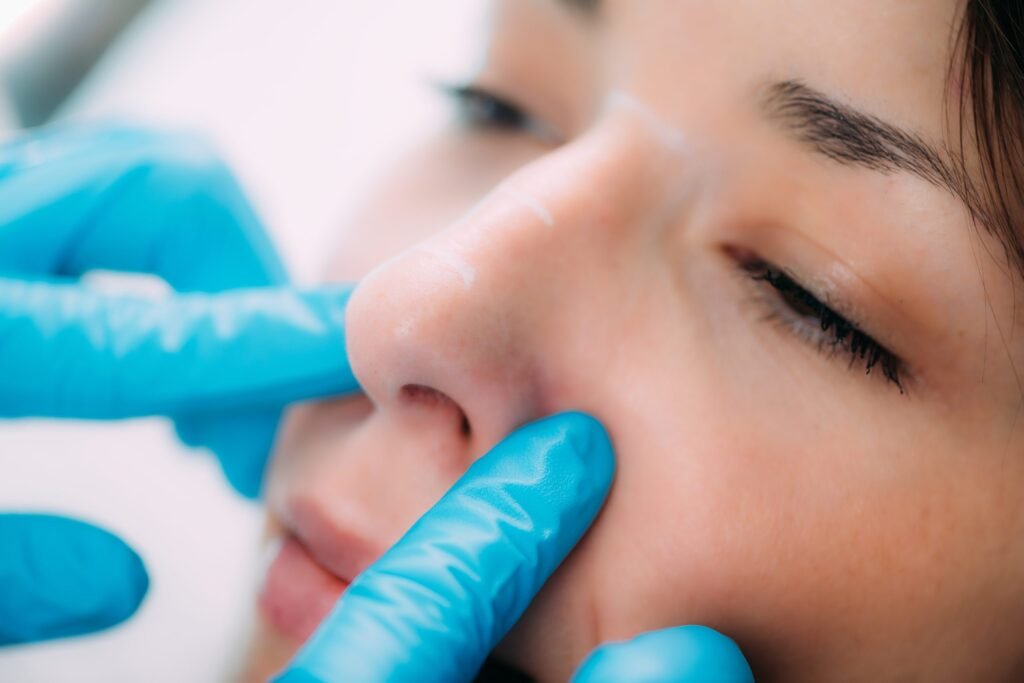
- Preservation of Internal Nasal Valve Patency: During the narrowing of the middle vault, we utilize Spreader Grafts or Flaring Sutures. This ensures that the angle between the septum and the upper lateral cartilages remains optimal for unobstructed nasal airflow.
- Reinforcement of the Structural Scaffold: We avoid excessive "resection" (cutting away) of cartilage. Instead, we use Structural Cartilage Grafting (Autologous Scaffolding) to narrow the nose while increasing its resistance to inspiratory collapse.
- Mitigation of Structural Recoil: Utilizing precise suture techniques (Interdomal and Transdomal), we reshape the lower lateral cartilages to ensure the narrowed tip remains stable and does not "drift" or collapse over time.
- Multi-Vector Aesthetic Harmony: We perform a Cephalometric Analysis to ensure the new nasal width is balanced from the frontal, profile, and basal (bottom-up) views.
- Multi-Vector Aesthetic Harmony: We perform a Cephalometric Analysis to ensure the new nasal width is balanced from the frontal, profile, and basal (bottom-up) views.
- Respect for Ethnic Identity: We specialize in Ethnic Rhinoplasty, narrowing the alar base and bridge while maintaining the natural characteristics and nasofacial angles unique to the patient’s heritage.
“Our objective is a nose that is aesthetically refined on the outside and structurally superior on the inside.” This is called Advanced Functional Rhinoplasty — combining beauty with breathing.
Excessive width at the base where the nostrils meet the facial plane. This is often prominent during smiling (dynamic flare).
Who is a Good Candidate? Clinical Candidacy for Broad Nose Correction
Determining suitability for Broad Nose Correction involves a comprehensive evaluation of the nasal cutaneous envelope and the underlying osteocartilaginous framework. At Microcare ENT Hospital, an ideal candidate typically presents with one or more of the following clinical indicators:

- Wide Nasal Bony Vault: Excessive lateral distance between the nasal bones, creating a heavy appearance in the upper third of the face.
- Bulbous Lobular Complex: A bulky or undefined nasal tip caused by divergent or excessive lower lateral cartilages (LLC).
- Alar Flare & Wide Nasal Base: Excessive width at the alar-facial groove, often more prominent during dynamic facial expressions (smiling).
- Thick Sebaceous Skin: A heavy integumentary envelope with a thick SMAS layer that masks the underlying cartilaginous definition.
- Disruption of Vertical Facial Thirds: Nasal width that exceeds the intercanthal distance (the space between the inner corners of the eyes), affecting overall facial harmony.
- Skeletal Maturity: Candidates must have reached full facial growth (typically ages 18 and above) to ensure the structural realignment remains stable and symmetrical.
- Psychological Readiness: Individuals with realistic clinical expectations regarding the degree of narrowing possible based on their unique skin thickness and bone structure.
The Biological Healing Cascade: Post-Operative Recovery
Recovery from Broad Nose Correction involves the gradual adaptation of the nasal skin to a narrower osteocartilaginous framework. At Microcare ENT Hospital, we provide a structured post-operative protocol to ensure the new symmetry is maintained during the inflammatory phase.
- Days 1–3: The Acute Inflammatory Phase
- Patients experience localized periorbital edema (swelling around the eyes) and mild congestion.
- Elevating the head and utilizing cold compresses are essential for nociceptive management and reducing early-stage swelling.
- Days 5–7: Structural Stabilization & Splint Removal
- The dorsal nasal splint—which stabilizes the precision osteotomies—is removed.
- Fine monofilament sutures at the alar-facial groove (if alar base reduction was performed) are carefully extracted.
- Week 2: Social Re-integration
- Most ecchymosis (bruising) has faded. The nose begins to appear significantly narrower on the frontal view.
- Patients are generally socially presentable and can resume sedentary professional activities.
- Weeks 4–6: Resolution of Macroscopic Edema
- Major swelling subsides as the lymphatic drainage restores.
- Strenuous physical exertion and Valsalva-inducing activities should be avoided to prevent secondary bleeding or displacement of the newly set nasal bones.
- Months 3–6: Sub-Clinical Refinement
- The nasal tip continues to refine as the sebaceous skin “shrink-wraps” over the narrowed cartilage.
- For patients with a thick integumentary envelope, this phase is critical; we may monitor for fibrosis (excess scar tissue) during follow-ups.
- Month 12: Final Structural Maturation
- The definitive narrowed shape is realized. The structural grafts are fully integrated, providing a permanent, symmetrical profile.
Cost of Broad Nose Correction in Hyderabad:
The cost of narrowing a broad nose is determined by the specific anatomical sub-units requiring correction and the complexity of the structural realignment. At Microcare ENT Hospital & Research Institute, Centre for Advanced Rhinoplasty & Functional Nose Surgery we provide transparent, value-based pricing that reflects our status as a specialized Centre for Advanced Rhinoplasty.
Primary Clinical Cost Drivers:
- Osteotomy Requirements: Narrowing a wide bony vault requires precise surgical bone repositioning, which is technically more demanding than cartilage work alone.
- Tip Refinement (Tiplasty): Addressing a bulbous tip involves intricate suture techniques and potentially autologous grafting to ensure long-term definition.
- Alar Base Reduction: Performing a Weir Wedge Resection or cinch technique to reduce nostril flare requires meticulous incision placement at the alar-facial groove.
- Functional Integration: Concurrent correction of nasal valve collapse or septal deviation to ensure that narrowing the nose does not compromise airway patency.
- Primary vs. Revision Complexity: Correcting a previously widened or collapsed nose (Revision) often requires costal (rib) cartilage harvesting, increasing the surgical time and cost.
The Microcare Advantage: Precision in Broad Nose Realignment
Narrowing a wide nasal framework requires a sophisticated understanding of nasal biomechanics. At Microcare ENT Hospital & Research Institute, we provide a level of sub-specialization that ensures your results are as functional as they are beautiful.
- Dedicated Center for Advanced Rhinoplasty: We are not a generalist hospital. Our facility is a specialized Research Institute focused exclusively on the complexities of the nasal pyramid and respiratory health.
- 26+ Years of Specialist Expertise: Led by senior specialists with over two decades of experience, our team has performed thousands of successful Broad Nose Corrections, ranging from primary narrowing to complex Revision Rhinoplasty.
- Advanced Structural Techniques: We utilize Precision Osteotomies and Autologous Grafting (using your own tissue) to narrow the nose. This prevents the "surgical" look and avoids the long-term risks associated with synthetic implants.
- Integrated Functional + Cosmetic Expertise: As ENT and Facial Plastic Surgery Specialists, we ensure that narrowing the nose never compromises the internal nasal valve. We concurrently treat breathing issues and aesthetic width in a single procedure.
- Ethical, Patient-Centered Philosophy: Every surgical plan is a scientifically designed correction based on your specific cephalometric proportions. We advocate for conservative, stable results that prioritize your lifelong health.
- Natural Results — Not Over-Narrowed: Our philosophy is "Natural Narrowing." We focus on creating a refined brow-tip aesthetic line that respects your ethnic identity and avoids the artificial, "pinched" appearance.
“At Microcare, we don’t just narrow the nose; we refine the facial axis to restore your confidence through clinical excellence.”

Dr. Sriprakash Vinnakota
MS ENT, HEAD & NECK
CHIEF RHINOPLASTY SURGEON
26+ years of Experience
The ENT Advantage: Why Specialized Expertise Matters in Rhinoplasty
A successful rhinoplasty must achieve a delicate equilibrium between form and function. Because the nose is primarily a complex respiratory organ, the specialized training of an ENT (Otolaryngology) Surgeon provides a distinct advantage in ensuring long-term surgical success.
A successful rhinoplasty must achieve a delicate equilibrium between form and function. Because the nose is primarily a complex respiratory organ, the specialized training of an ENT (Otolaryngology) Surgeon provides a distinct advantage in ensuring long-term surgical success.
At Microcare ENT, Center for Advanced Rhinoplasty & Functional Nose Surgery, our surgical philosophy is rooted in the following four pillars of ENT expertise:
Why Choose Microcare ENT for Your Rhinoplasty?
Selecting the right facility for nasal reshaping surgery is a decision that impacts both your lifelong breathing health and your facial aesthetic. As a premier Centre for Advanced Rhinoplasty & Functional Nose Surgery, Microcare ENT provides a level of precision and safety that sets us apart in the field of facial plastic surgery.

1. Board-Certified ENT & Super Specialised Expertise
Under the leadership of Dr. Sriprakash Vinnakota, our team brings over 26 years of clinical experience to every procedure. We are not just cosmetic surgeons; we are ENT, Head & Neck specialists who understand the deep-seated relationship between nasal form and respiratory function.
2. Dual-Focus Approach: Functional & Aesthetic Harmony
We reject the “one-size-fits-all” model. Every rhinoplasty at Microcare ENT is a customized Septorhinoplasty, ensuring that as we refine your nasal bridge or tip, we simultaneously optimize your airway. We specialize in achieving Natural-Looking Results that never appear “operated on.”
3. Advanced Surgical Technology
We utilize 2026’s gold-standard medical technologies to ensure faster recovery and higher precision:
- Endoscopic Assistance: For clear visualization of internal nasal structures.
- Piezoelectric (Ultrasonic) Tools: To reshape nasal bones with minimal trauma, reducing post-operative bruising and swelling.
- Modern Level-3 Modular OTs: Ensuring a sterile, safe, and controlled surgical environment.
4. Ethical & Patient-Centric Care
At an Advanced Super Speciality level, we adhere to the highest ethical standards. Our protocols include:
- Transparent Consultations: We provide honest assessments of what can be achieved, prioritizing your safety over surgical volume.
- Structured Post-Operative Follow-ups: Comprehensive long-term care to monitor your healing progress for up to a year after surgery.
- Affordable Excellence: Providing world-class super-speciality care with transparent pricing and ethical treatment paths.
Schedule Your Consultation Today
Experience the difference that Advanced Super Speciality expertise makes. Whether you are seeking cosmetic refinement or relief from chronic breathing issues, the Functional & Cosmetic Nose Surgery Specialist team at Microcare ENT Hospital, Hyderabad, is here to help you achieve a balanced, healthy, and confident profile.
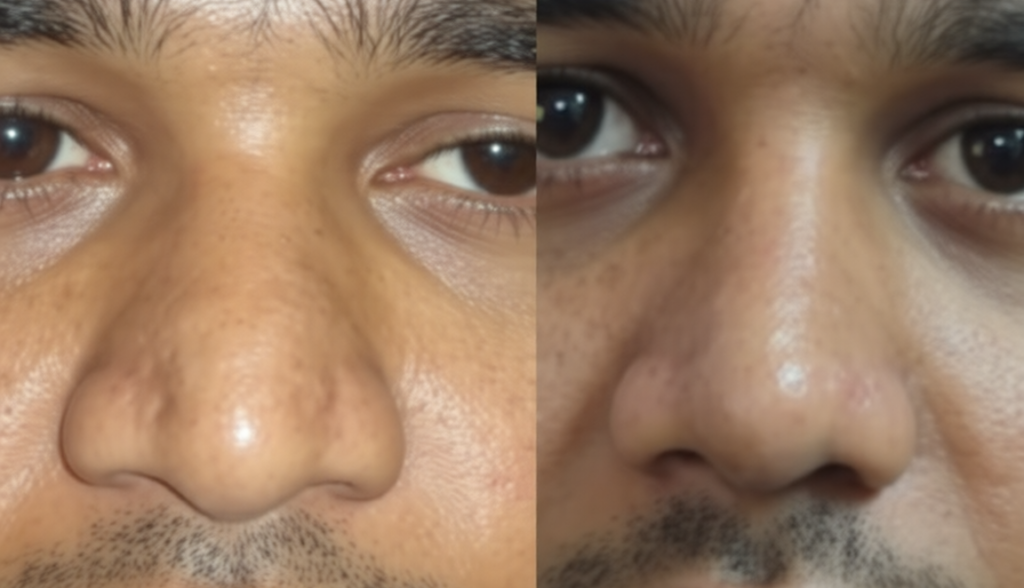
Rhinoplasty Before & After Results
The images above show a real case performed at Microcare ENT, demonstrating refined nasal contour and improved facial balance through personalized nose reshaping surgery.
What Was Improved?
- Before Surgery:
- Broad nasal bridge with limited definition
- Mild asymmetry
- Rounded nasal tip affecting overall proportion
- After Surgery:
- Smoother, more defined nasal bridge
- Improved symmetry
- Refined nasal tip
- Better overall facial harmony
The results are subtle and balanced — designed to enhance appearance without looking artificial.
Frequently Asked Questions (FAQs): Understanding Rhinoplasty
1.Is broad nose correction permanent?
“At Microcare, we don’t just narrow the nose; we refine the facial axis to restore your confidence through clinical excellence.”
2. Will my nose look too narrow or "pinched" after surgery?
“At Microcare, we don’t just narrow the nose; we refine the facial axis to restore your confidence through clinical excellence.”
3. Is the surgery painful?
The surgical procedure is performed under Board-Certified General Anesthesia, ensuring a completely painless experience throughout the 2–4 hour operation. Post-operatively, most patients at Microcare ENT Hospital & Research Institute describe the sensation as “nasal fullness” or “congestion” rather than acute pain. This discomfort is primarily due to internal mucosal edema and is highly manageable with a prescribed regimen of analgesics and anti-inflammatories. Because we utilize Precision Osteotomy techniques, tissue trauma is minimized, leading to a smoother recovery. If alar base reduction is performed, mild tenderness at the incision site may be felt for 3–5 days, which resolves quickly with standard clinical care.
4.Will there be visible scars after Broad Nose Correction?
In most cases, no. At Microcare ENT Hospital & Research Institute, Centre for Advanced Rhinoplasty & Functional Nose Surgery we prioritize meticulous incision placement to ensure that any post-surgical marks are practically imperceptible. If an Open Rhinoplasty approach is required for complex tip refinement or osteotomy access, a tiny inverted-V incision is made across the columella (the tissue between the nostrils). Due to the high regenerative capacity of this area, this scar typically fades into a faint, invisible line within a few months.
For Alar Base Reduction, incisions are hidden precisely within the alar-facial groove, where the nostril meets the cheek, ensuring they blend with the natural shadows of the face. Our surgeons utilize fine-gauge monofilament sutures and advanced scar management protocols to facilitate optimal healing and a seamless, “non-operated” appearance.
5.Does insurance cover Broad Nose Correction?
Generally, purely elective procedures performed for aesthetic refinement are not covered by standard health insurance. However, if the Broad Nose Deformity is associated with a functional airway deficit—such as Internal Nasal Valve Collapse caused by a wide, unstable middle vault—partial coverage may be applicable under Reconstructive Septorhinoplasty.
At Microcare ENT Hospital & Research Institute, Centre for Advanced Rhinoplasty & Functional Nose Surgery we perform a Diagnostic Nasal Endoscopy to document any physiological obstructions. If your surgery includes correcting nasal airway resistance or repairing a post-traumatic deformity, our billing department can assist in coordinating with your TPA (Third Party Administrator) to determine if the functional components of the procedure qualify for coverage under your specific policy.
6. What are the clinical risks associated with Broad Nose Correction?
While narrowing the nasal framework is highly predictable at a specialized center, it is a complex reconstructive procedure. Potential clinical risks include transient post-operative edema (swelling), periorbital ecchymosis (bruising), or minor asymmetry during the 12-month healing phase.
A specific risk in broad nose surgery is Internal Nasal Valve Stenosis if the middle vault is over-narrowed; however, at Microcare ENT Hospital & Research Institute, we mitigate this by utilizing Spreader Grafts to preserve airway patency. By choosing an experienced Rhinoplasty & Advanced Nose Surgery Specialist who employs Precision Osteotomies and Autologous Grafting, the statistical probability of complications or the need for a secondary Revision Rhinoplasty is significantly minimized.
Watch our Related Videos
Explore Our Related Blogs
Medically Reviewed By:
Dr. Sriprakash Vinnakota, MBBS, MS ENT, Head & Neck
Rhinoplasty & Advanced Nose Surgery Specialist
Chief Rhinoplasty Surgeon with 26+ Years of Experience
Microcare ENT Hospital & Research Institute– Centre for Advanced Rhinoplasty & Functional Nose Surgery
Reviewed on: January 18, 2026