
Crooked Nose Correction in Hyderabad
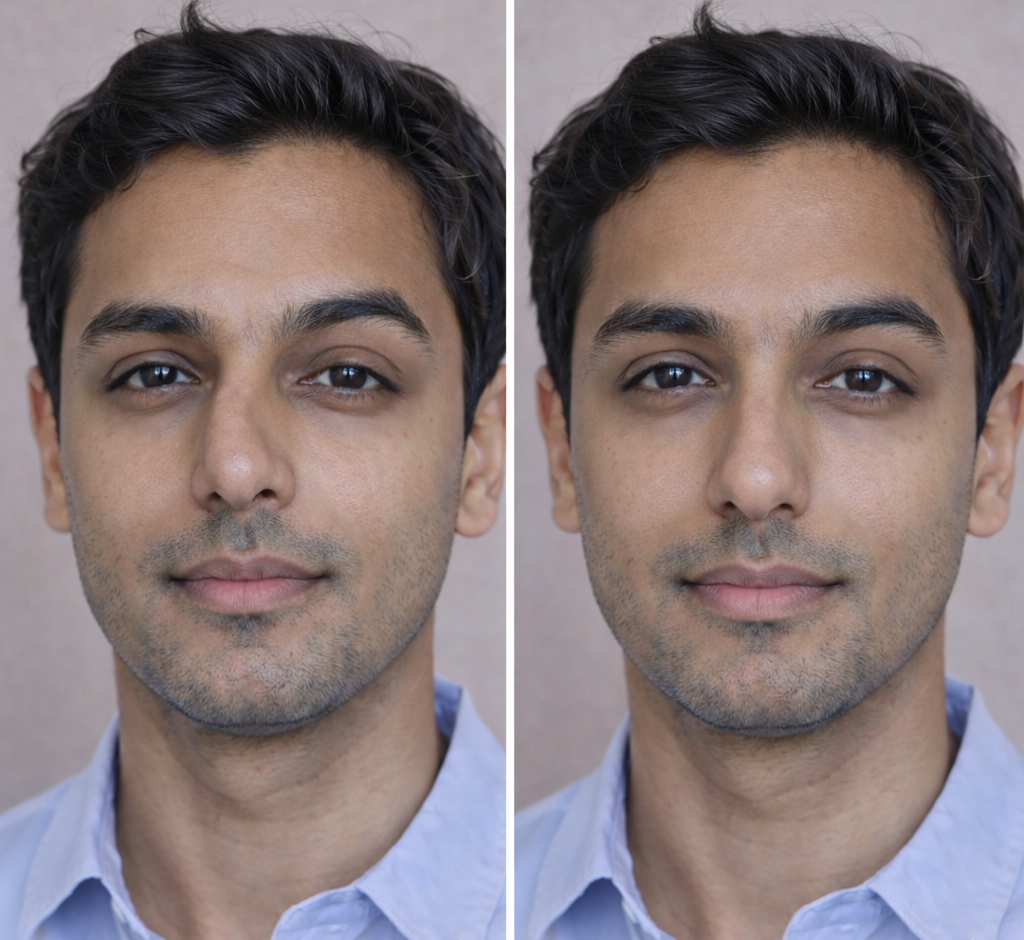
Crooked Nose Correction
Rhinoplasty for the Crooked Nose: Integrating Structural Stability and Airway Patency
Advanced Functional + Aesthetic Nose Correction
Is Your Nose Crooked or Deviated?
A crooked nose involves more than surface-level asymmetry; it often signals a complex misalignment of the nasal pyramid and septal framework.
India's Top Rhinoplasty Surgeon

These structural deviations typically manifest as:
- Visible Facial Asymmetry: Disruption of the central facial axis due to C-shaped, S-shaped, or linear deviations.
- Chronic Nasal Obstruction: Unilateral or bilateral blockage of the internal nasal valve, the narrowest part of the airway.
- Compromised Respiration: Laboured breathing and increased reliance on mouth breathing.
- Sleep Disturbances: Significant snoring or obstructive sleep apnea (OSA) caused by restricted airflow.
- Recurrent Sinusitis: Impaired mucosal drainage leading to frequent sinus infections and facial pressure.
Our Specialized Approach in Hyderabad
At Microcare ENT Hospital & Research Institute, we specialize in Advanced Functional Rhinoplasty. Our surgeons go beyond simple cosmetic adjustments, utilizing Septorhinoplasty—a comprehensive procedure that corrects the internal deviated septum while simultaneously reshaping the external nasal architecture through Functional + Aesthetic Nose Correction.
What Is a Crooked Nose?
A crooked nose deformity refers to a multi-level deviation of the nasal framework from the facial midline. It involves misalignment in one or more of the following anatomical zones:
- Bony Vault (Upper Third): Deviation or asymmetry of the nasal bones and the frontal process of the maxilla.
- Cartilaginous Middle Vault: Asymmetry of the upper lateral cartilages, often resulting in "pinched" or collapsed sidewalls.
- Nasal Tip (Lower Third): Displacement of the lower lateral cartilages, causing the tip to point away from the midline.
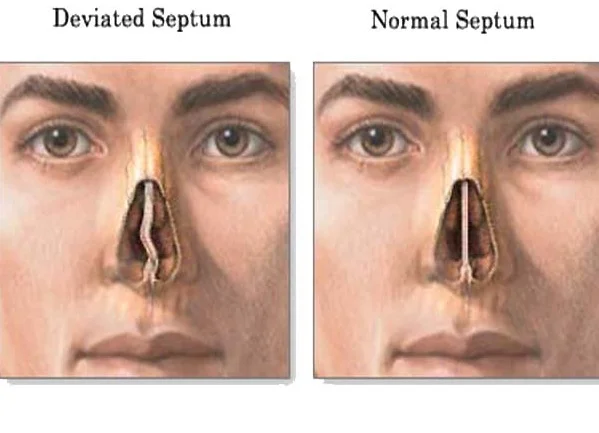
- Nasal Septum: Internal deviation of the quadrangular cartilage or bony septum, which acts as the primary "tent pole" for the entire nose.
Because the nose is the gateway to the respiratory system, successful rhinoplasty requires profound anatomical knowledge. At Microcare ENT, our expertise in Advanced Functional Rhinoplasty ensures that every aesthetic refinement is supported by a stable, functional airway.
Clinical Classifications of Deviation
Surgeons categorize these deformities based on the shape of the deviation:
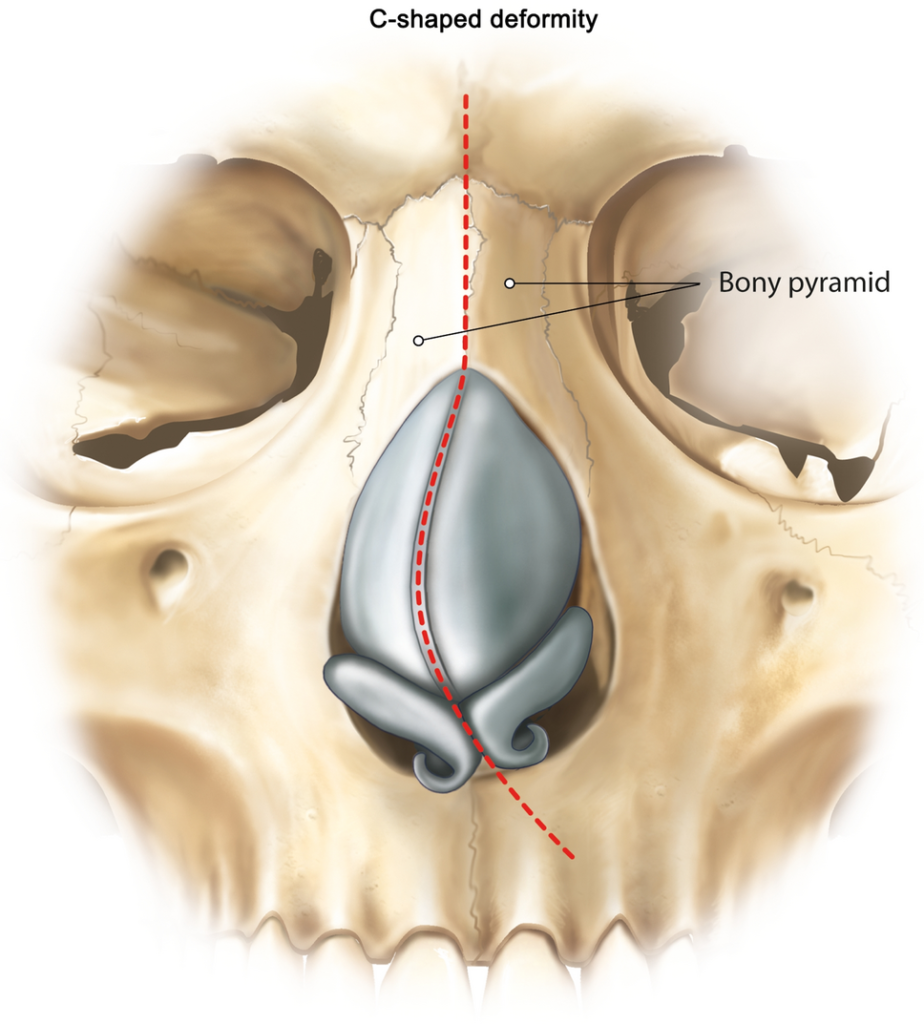
- C-shaped Deformity: A single arc deviation where the bridge curves to one side.
- S-shaped (Sinusoidal) Deformity: A complex, "twisted" appearance where the upper and lower segments deviate in opposite directions.
- Post-Traumatic Deviation: Structural displacement resulting from nasal fractures or blunt force trauma.
- Post-Surgical (Revision) Deformity: Asymmetry occurring after a primary rhinoplasty due to cartilage memory or weakened structural support.
Why Crooked Nose Correction Is Complex
Correction of a crooked nose is widely regarded as one of the most technically demanding procedures in Septorhinoplasty. Unlike standard cosmetic cases, a deviated nose involves “tension forces” and cartilage memory that can cause the nose to drift back to its original crooked position if not managed correctly.
Successful, permanent correction requires a multi-faceted approach:
- Structural Realignment of Nasal Bones: Utilizing precise osteotomies (surgical bone reshaping) to reset the bony pyramid and eliminate "I-shaped" or "C-shaped" deviations.
- Total Septal Reconstruction: Often, a simple septoplasty is insufficient. We perform comprehensive reconstruction to ensure the septal L-strut (the primary support structure) is perfectly vertical.
- Nasal Valve Repair: Addressing vestibular stenosis (internal narrowing) to ensure that straightening the nose also improves airflow.
- Advanced Cartilage Grafting: Using Spreader Grafts, Strut Grafts, or Clocking Sutures to reinforce the new structure and counteract the natural tendency of cartilage to warp.
- Aesthetic Symmetry Restoration: Achieving a balanced brow-tip aesthetic line, ensuring the nose looks natural and proportional from every angle.
Why Specialist Expertise Matters
Because the internal and external structures are inseparable, this procedure must be performed by a Functional & Cosmetic Nose Surgery Specialist. At Microcare ENT Hospital, our surgeons are trained in both the intricacies of Otolaryngology (the science of breathing) and the artistry of Rhinoplasty (the science of aesthetics).
Causes of Crooked Nose
The development of a deviated nasal axis generally falls into three clinical categories. Understanding the underlying cause is the first step in determining the appropriate surgical trajectory.
1. Nasal Trauma (Post-Traumatic Deviation)
Physical impact is the most prevalent cause of nasal asymmetry. Whether from road traffic accidents, contact sports, or childhood injuries, trauma disrupts the bony-cartilaginous framework.
- Fractured Nasal Bones: Displacement of the bony vault requiring precise osteotomies.
- Septal Hematoma/Abscess: Untreated trauma can lead to septal necrosis (cartilage death), causing a "Saddle Nose" or severe deviation.
- Internal Nasal Valve Stenosis: Trauma often collapses the upper lateral cartilages, causing progressive airway obstruction.
- Birth Trauma: Micro-fractures during delivery can cause the nose to grow asymmetrically during puberty.
2. Septal Pathologies & Autoimmune Conditions
Systemic or localized diseases can erode the structural integrity of the quadrangular cartilage (the main support beam of the nose).
- Inflammatory Disorders: Conditions such as Granulomatosis with Polyangiitis (Wegener's) or Relapsing Polychondritis can cause "melting" of the nasal cartilage.
- Septal Perforations: Chronic inflammation or infections can create holes in the septum, leading to structural instability and a subsequent crooked appearance.
3. latrogenic Causes (Revision Rhinoplasty)
Patients often seek Revision Rhinoplasty in Hyderabad at Microcare ENT Hospital after a primary surgery fails to maintain long-term stability.
- Over-resection: Excessive removal of bone or cartilage during a previous "nose job" leads to midvault narrowing and external collapse.
- Contracture & Scarring: Improper healing or "cartilage memory" pulls the nose back to its original axis.
- Structural Failure: Inadequate support of the nasal tip causes it to droop or deviate over time.
- Breathing Compromise: Often, purely cosmetic surgeries ignore the internal nasal valve, necessitating a secondary functional correction.
These cases require Advanced Functional Rhinoplasty with structural reconstruction.
Our Scientific Approach to Crooked Nose Correction, the Microcare Protocol
At Microcare ENT Hospital & Research Institute—Hyderabad’s premier Center for Advanced Rhinoplasty & Functional Nose Surgery—we move beyond surface-level correction. Our surgeons utilize a three-stage clinical pathway to ensure both permanent symmetry and unrestricted respiratory flow.
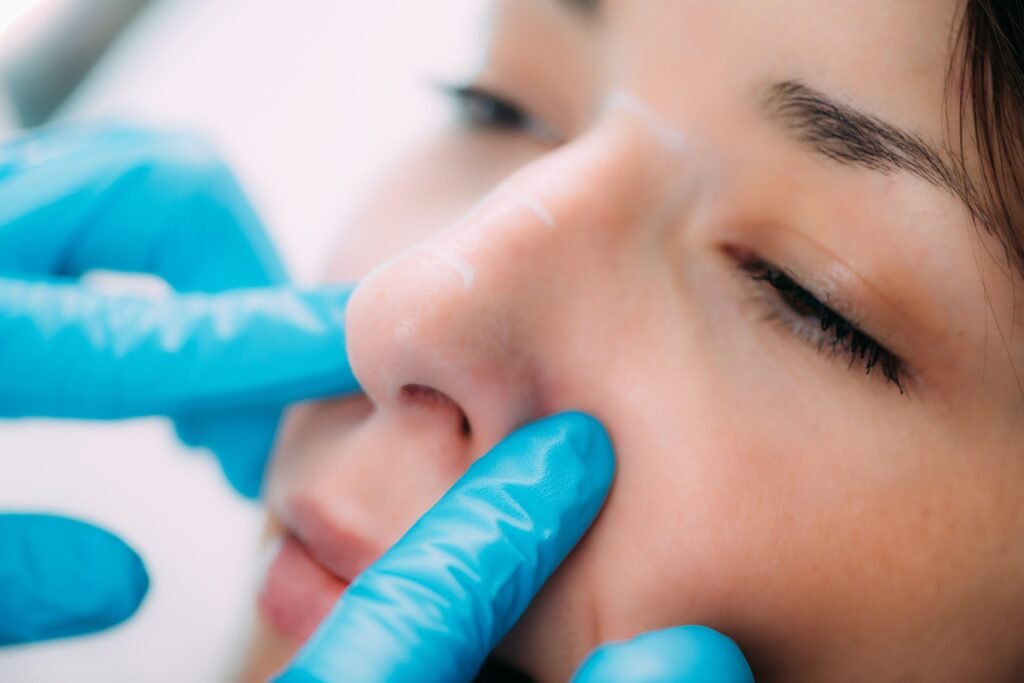
Phase 1: Diagnostic Assessment & Airway Mapping
We begin with an objective evaluation of the nasal architecture:
- Clinical Cephalometric Analysis: Measuring facial proportions and the nasal-facial angle to define the ideal midline.
- Diagnostic Nasal Endoscopy: High-definition visualization of the internal nasal valve and posterior septal deviations.
- Acoustic Rhinometry/Airway Evaluation: Objective measurement of nasal patency and resistance.
- Standardized Digital Documentation: Multi-angle photography to map the C-shaped or S-shaped structural deficits.
Phase 2: Bio-Mechanical Planning
Before the first incision, we analyze the structural “load-bearing” components:
- Vector Analysis of Deviation: Determining if the crookedness is primarily bony, cartilaginous, or both.
- Septal Integrity Study: Assessing the availability of autologous cartilage for reconstruction.
- Dynamic Valve Assessment: Observing the nostrils during inspiration to detect alar collapse.
Phase 3: Advanced Structural Septorhinoplasty
Our surgical interventions focus on “rebuilding” rather than just “resection.” Depending on the deformity, we employ:
- Extracorporeal Septoplasty: For severe deviations, the septum is temporarily removed, straightened outside the body, and re-implanted as a perfectly straight support.
- Precision Osteotomies: Micro-fracturing of the nasal bones to reset the bony vault into the midline.
- Functional Grafting:
- Spreader Grafts: To widen the internal nasal valve and rectify mid-vault narrowing.
- Batten Grafts: To provide structural “bracing” for the nasal sidewalls.
- Septal Extension Grafts: For definitive nasal tip stabilization and control of projection.
What Makes Us Different?
Why Choose Microcare ENT Hospital & Research Institute?
Center for Advanced Rhinoplasty & Functional Nose Surgery
The correction of a crooked nose requires a rare intersection of Otolaryngology (ENT) and Plastic Surgery. At Microcare ENT Hospital, we distinguish ourselves through a philosophy of Bio-Mechanical Precision:
- Dedicated Rhinology Sub-Specialists: Our lead surgeons are not generalists; they are specialists focused exclusively on the complex anatomy of the nasal airway and nasal pyramid.
- Pioneers in Functional Septorhinoplasty:We don't just "straighten" the nose; we perform comprehensive airway reconstruction. This ensures that aesthetic refinement never comes at the expense of respiratory health.
- The "Structural Organ" Philosophy: We treat the nose as a three-dimensional physiological organ. Our goal is to harmonize the nasal valves, the septal framework, and the bony vault.
- Mitigating Cartilage Memory: Utilizing advanced grafting and suturing techniques, we proactively address the bio-elasticity of cartilage to prevent post-operative "drifting" and ensure long-term structural results.
- Ethical Clinical Practice: Every surgical plan is derived from objective diagnostic data (Endoscopy/Acoustic Rhinometry), ensuring a transparent, patient-centered approach.
“At Microcare, we don’t just change how you look; we change how you live by restoring the foundational function of your airway.”
Who Is a Candidate for Crooked Nose Correction?
Candidates for Functional & Aesthetic Septorhinoplasty at Microcare ENT Hospital typically present with one or more of the following structural or physiological concerns:
- Visible Axial Deviation: Obvious misalignment of the nasal pyramid (C-shaped, S-shaped, or linear) that disrupts facial harmony and the central aesthetic line.
- Unilateral or Bilateral Airway Obstruction: Persistent difficulty breathing through one or both nostrils, often exacerbated by septal spurring or turbinate hypertrophy.
- Internal Nasal Valve Stenosis: A narrow internal angle between the septum and the upper lateral cartilage, leading to a "pinched" sensation and chronic nasal blockage.
- Sleep-Disordered Breathing: Significant snoring or poor sleep quality directly linked to nasal resistance and compromised airflow.
- Post-Traumatic Structural Displacement: A documented history of nasal fractures or blunt force trauma that has resulted in a permanent shift of the bony vault.
- Secondary Deformity (Revision Candidates): Patients with an unsatisfactory outcome from a primary surgery, characterized by nasal collapse, tip deviation, or worsening functional issues.
- Cessation of Facial Growth: Ideally, candidates should have reached skeletal maturity (typically ages 16+ for females and 17-18+ for males) to ensure long-term stability of the surgical correction.
Benefits of Advanced Functional Rhinoplasty
At Microcare ENT Hospital & Research Institute, Centre for Advanced Rhinoplasty & Functional Nose Surgery our objective is to achieve a result where form and function exist in perfect equilibrium. The primary benefits of our specialized approach include:
- Restoration of Nasal Axial Symmetry: Correcting deviations of the bony and cartilaginous vaults to align the nose with the central facial midline, resulting in a straighter, more harmonious profile.
- Optimization of Physiological Airway Patency: Significant improvement in respiratory flow by addressing the root causes of obstruction, such as septal deviation and turbinate hypertrophy.
- Resolution of Nasal Valve Collapse: Utilizing advanced grafting techniques (Spreader Grafts/Batten Grafts) to widen the internal and external valves, preventing the nostrils from collapsing during deep inspiration.
- Refinement of Facial Proportions: Enhancing the nasofacial and nasolabial angles to ensure the nose is balanced with the forehead, chin, and cheeks.
- Long-Term Structural Integrity: Unlike purely cosmetic procedures, our focus on reconstructive scaffolding ensures that the results are stable and resistant to the "relapse" often caused by cartilage memory.
- Improved Quality of Life: Reduction in secondary symptoms such as chronic mouth breathing, dry throat, and sleep-disordered breathing (snoring).
The Post-Operative Healing Cascade: What to Expect
Recovery from Functional & Aesthetic Septorhinoplasty is a phased process where the internal airway stabilizes before the external swelling fully subsides. At Microcare ENT Hospital, we provide a detailed post-operative protocol to ensure optimal structural outcomes.
- Initial Stabilization (Days 1–7):
- A Dorsal Nasal Splint (external) and potentially Internal Septal Splints are used to maintain the new midline position and stabilize the reconstructed septal L-strut.
- Patients may experience temporary congestion as the nasal mucosa heals.
- Resolution of Ecchymosis & Edema (Weeks 1–2):
- Periorbital ecchymosis (bruising around the eyes) and mild facial edema (swelling) typically peak at 48–72 hours and resolve within 10 to 14 days.
- The external splint is removed after one week, revealing the initial realignment of the nasal pyramid.
- Restoration of Physiological Airway Patency (Weeks 2–6):
- As internal mucosal swelling decreases, patients report a significant improvement in nasal airflow and a reduction in mouth breathing.
- Most patients return to sedentary work or light activity during this window.
- Sub-Clinical Refinement (6–12 Months):
- While the nose appears "straight" within weeks, the integumentary envelope (nasal skin) takes months to shrink-wrap over the new cartilaginous framework.
- The final refined shape and the full strength of the structural grafts are typically realized at the one-year mark.
The Gold Standard for Crooked Nose Correction in Hyderabad
When seeking the Best Crooked Nose Correction Surgeon in Hyderabad, it is essential to prioritize a specialist who commands a deep understanding of both the internal respiratory architecture and the external aesthetic framework.
At Microcare ENT Hospital & Research Institute, our Centre for Advanced Rhinoplasty & Functional Nose Surgery provides a level of sub-specialization rarely found in general plastic surgery clinics.
Why We are the Preferred Specialist in Telangana & Andhra Pradesh:
- Advanced Functional Rhinoplasty Specialist: Our lead surgeons are experts in the biomechanics of the nasal valve, ensuring that "straightening" the nose results in vastly superior airway patency.
- Comprehensive Diagnostic Infrastructure: We utilize High-Definition Nasal Endoscopy and Acoustic Rhinometry to map septal deviations before the first incision is made.
- Revision Rhinoplasty Expert: We are a primary referral center for complex secondary and tertiary cases, specializing in the reconstruction of over-resected or collapsed nasal structures using autologous rib or ear cartilage grafts.
- Scientifically Tailored Surgical Protocols: No "cookie-cutter" procedures. Every surgical plan is a unique cephalometric correction designed to harmonize with your specific facial proportions and skeletal anatomy.

Dr. Sriprakash Vinnakota
MS ENT, HEAD & NECK
CHIEF RHINOPLASTY SURGEON
26+ years of Experience
The ENT Advantage: Why Specialized Expertise Matters in Rhinoplasty
A successful rhinoplasty must achieve a delicate equilibrium between form and function. Because the nose is primarily a complex respiratory organ, the specialized training of an ENT (Otolaryngology) Surgeon provides a distinct advantage in ensuring long-term surgical success.
A successful rhinoplasty must achieve a delicate equilibrium between form and function. Because the nose is primarily a complex respiratory organ, the specialized training of an ENT (Otolaryngology) Surgeon provides a distinct advantage in ensuring long-term surgical success.
At Microcare ENT, Center for Advanced Rhinoplasty & Functional Nose Surgery, our surgical philosophy is rooted in the following four pillars of ENT expertise:
Why Choose Microcare ENT for Your Rhinoplasty?
Selecting the right facility for nasal reshaping surgery is a decision that impacts both your lifelong breathing health and your facial aesthetic. As a premier Centre for Advanced Rhinoplasty & Functional Nose Surgery, Microcare ENT provides a level of precision and safety that sets us apart in the field of facial plastic surgery.

1. Board-Certified ENT & Super Specialised Expertise
Under the leadership of Dr. Sriprakash Vinnakota, our team brings over 26 years of clinical experience to every procedure. We are not just cosmetic surgeons; we are ENT, Head & Neck specialists who understand the deep-seated relationship between nasal form and respiratory function.
2. Dual-Focus Approach: Functional & Aesthetic Harmony
We reject the “one-size-fits-all” model. Every rhinoplasty at Microcare ENT is a customized Septorhinoplasty, ensuring that as we refine your nasal bridge or tip, we simultaneously optimize your airway. We specialize in achieving Natural-Looking Results that never appear “operated on.”
3. Advanced Surgical Technology
We utilize 2026’s gold-standard medical technologies to ensure faster recovery and higher precision:
- Endoscopic Assistance: For clear visualization of internal nasal structures.
- Piezoelectric (Ultrasonic) Tools: To reshape nasal bones with minimal trauma, reducing post-operative bruising and swelling.
- Modern Level-3 Modular OTs: Ensuring a sterile, safe, and controlled surgical environment.
4. Ethical & Patient-Centric Care
At an Advanced Super Speciality level, we adhere to the highest ethical standards. Our protocols include:
- Transparent Consultations: We provide honest assessments of what can be achieved, prioritizing your safety over surgical volume.
- Structured Post-Operative Follow-ups: Comprehensive long-term care to monitor your healing progress for up to a year after surgery.
- Affordable Excellence: Providing world-class super-speciality care with transparent pricing and ethical treatment paths.
Watch our Related Videos
Explore Our Related Blogs
Frequently Asked Questions (FAQs): Understanding Rhinoplasty
1. What is a crooked nose?
A crooked nose is a nasal deformity where the nose deviates from the facial midline. The deviation may involve the nasal bones (upper third), the cartilaginous middle vault, the nasal tip, or the septum. It can appear C-shaped or S-shaped and is often associated with septal deviation and breathing difficulty.
2. Can a crooked nose cause breathing problems?
Yes. Many patients with a crooked nose also have septal deviation or nasal valve narrowing. These structural problems can cause nasal obstruction, mouth breathing, snoring, and reduced airflow. Advanced Functional Rhinoplasty addresses both the structural deviation and airway compromise.
3. What is Functional + Aesthetic Nose Correction?
Functional + Aesthetic Nose Correction is a comprehensive surgical approach that improves both nasal breathing and nasal appearance. It combines septal correction, nasal valve repair, and structural reconstruction with aesthetic refinement to restore symmetry and facial balance.
4. What is Advanced Functional Rhinoplasty?
Advanced Functional Rhinoplasty is a specialized nose surgery that focuses on correcting internal structural problems such as septal deviation, internal nasal valve collapse, external valve weakness, and midvault instability. Unlike a purely cosmetic nose job, it prioritizes long-term breathing improvement along with natural aesthetic results.
5. What are the common causes of a crooked nose?
The most common causes include:
- Nasal trauma from accidents or sports injuries
- Childhood or birth-related nasal injury
- Septal diseases affecting cartilage
- Previous rhinoplasty leading to structural weakness
- Aging and gravity-related nasal collapse
6. How is crooked nose correction performed?
Crooked nose correction is performed through Septorhinoplasty. The procedure may include septoplasty, controlled bone repositioning (osteotomies), cartilage grafting (such as spreader grafts or batten grafts), and nasal valve reconstruction. The surgical plan depends on the severity and pattern of deviation.
7. Do I need septoplasty during crooked nose surgery?
In many cases, yes. Septal deviation is commonly present in crooked nose deformity. Correcting the septum helps straighten the nose internally and improves breathing function. The need for septoplasty is determined during clinical evaluation.
8. Can crooked nose correction be done after previous rhinoplasty?
Yes. Crooked nose deformity can develop after previous rhinoplasty due to scarring, cartilage removal, or structural collapse. These cases require Revision Advanced Functional Rhinoplasty with structural rebuilding for long-term stability.
9. How long is recovery after crooked nose correction?
Most patients wear a nasal splint for about 7 days. Swelling and bruising usually improve within 1–2 weeks. Breathing improves as swelling reduces. Final cosmetic refinement may take 6–12 months.
10. Why choose Microcare ENT Hospital & Research Institute for crooked nose correction in Hyderabad?
Microcare ENT Hospital & Research Institute – Centre for Advanced Rhinoplasty & Functional Nose Surgery specializes in Advanced Functional Rhinoplasty and Functional + Aesthetic Nose Correction. The focus is on structural stability, airway improvement, and natural facial harmony under the care of a Rhinoplasty & Advanced Nose Surgery Specialist.
11. What is the cost of crooked nose correction in Hyderabad?
The cost of crooked nose correction depends on:
- Severity of deviation
- Need for septoplasty or nasal valve reconstruction
- Primary vs revision surgery
- Structural grafting requirements
- Operating time and complexity
Since crooked nose correction often requires Advanced Functional Rhinoplasty, the cost varies from case to case. A detailed consultation and airway assessment are necessary to provide an accurate estimate.
12. Is crooked nose correction a safe procedure?
Yes, when performed by a qualified Rhinoplasty & Advanced Nose Surgery Specialist, crooked nose correction is generally safe.
Safety depends on:
- Accurate diagnosis
- Proper structural surgical planning
- Surgical expertise
- Post-operative care compliance
At Microcare ENT Hospital & Research Institute – Centre for Advanced Rhinoplasty & Functional Nose Surgery, patient safety and structural stability are prioritized.
13. What are the risks of crooked nose surgery?
Like any surgical procedure, crooked nose correction carries potential risks, including:
- Swelling and bruising
- Temporary nasal congestion
- Bleeding
- Infection (rare)
- Scar tissue formation
- Residual asymmetry
- Need for revision surgery (in complex cases)
Choosing an experienced Functional & Cosmetic Nose Surgery Specialist significantly reduces complication risk.
14. Will my nose become perfectly straight?
The goal of surgery is significant improvement in alignment, symmetry, and breathing function.
However, the human face is naturally asymmetrical. In severe deformities or revision cases, complete mathematical straightness may not be possible, but structural balance and functional improvement are the priority.
15. How long is the downtime after crooked nose correction?
Typical recovery timeline:
- Nasal splint: 7 days
- Bruising/swelling: 1–2 weeks
- Return to desk work: 7–10 days
- Light activities: 2 weeks
- Avoid heavy exercise: 4–6 weeks
Subtle swelling continues to refine over several months.
16. When will I see the final results?
Initial improvement is visible after splint removal.
However:
- Major swelling reduces in 4–6 weeks
- Structural stabilization occurs over months
- Final refined result typically appears between 6–12 months
Functional breathing improvement is often noticeable earlier as swelling subsides.
17. Is crooked nose correction covered by insurance?
Insurance coverage depends on whether the surgery is performed for:
- Functional reasons (breathing difficulty, septal deviation, valve collapse)
- Purely cosmetic reasons
Functional components such as septoplasty may qualify under certain insurance policies. Coverage varies by insurer and policy terms. Documentation of airway obstruction may be required.
18. Can crooked nose correction improve snoring?
If snoring is caused by nasal obstruction due to septal deviation or nasal valve collapse, Advanced Functional Rhinoplasty may improve airflow and reduce nasal-related snoring.
However, snoring may also have other causes (throat or sleep apnea related), which require separate evaluation.
19. What makes Advanced Functional Rhinoplasty different from cosmetic rhinoplasty?
Cosmetic rhinoplasty focuses primarily on appearance.
Advanced Functional Rhinoplasty focuses on:
- Structural support
- Airway improvement
- Nasal valve correction
- Long-term stability
- Natural aesthetic balance
At Microcare ENT Hospital & Research Institute, the emphasis is on Functional + Aesthetic Nose Correction, ensuring both breathing and appearance are addressed together.
20. How do I know if I need revision surgery?
You may need evaluation for revision if you have:
- Persistent nasal blockage after previous surgery
- Visible deviation after prior rhinoplasty
- Nasal collapse or tip drooping
- Breathing difficulty that worsened over time
Revision cases require careful structural planning and are more complex than primary surgery.
Schedule Your Crooked Nose Evaluation in Hyderabad
If you have:
- Visible nasal deviation
- Difficulty breathing
- History of trauma
- Unsatisfactory previous rhinoplasty
Book a comprehensive evaluation at:
Microcare ENT Hospital & Research Institute
Centre for Advanced Rhinoplasty & Functional Nose Surgery
Hyderabad
Consult a Rhinoplasty & Advanced Nose Surgery Specialist for personalized Functional + Aesthetic Nose Correction.
Medically Reviewed By:
Dr. Sriprakash Vinnakota, MBBS, MS ENT, Head & Neck
Rhinoplasty & Advanced Nose Surgery Specialist
Chief Rhinoplasty Surgeon with 26+ Years of Experience
Microcare ENT Hospital & Research Institute– Centre for Advanced Rhinoplasty & Functional Nose Surgery
Reviewed on: January 18, 2026