
Depressed Nose Augmentation in Hyderabad
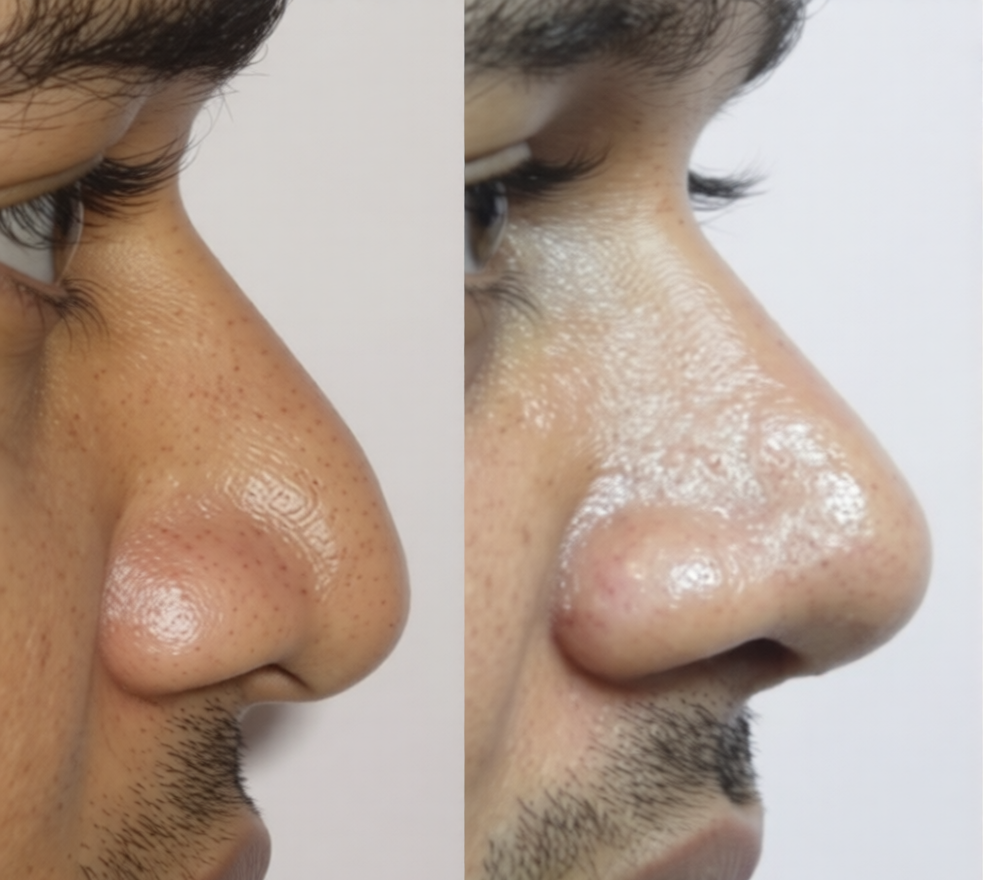
Depressed Nose Augmentation That Looks Natural—and Helps You Breathe Better
ENT-led Functional + Cosmetic Nose Surgery to restore bridge height, structural support, and long-term stability. We rebuild your nose from the inside out.
3 Benefits
✨ Bridge Elevation: Restores a smoother, stronger, and more elegant nasal profile.
🌬️ Optimal Airflow: Improves internal structure to fix collapse or obstruction.
⚖️ Balanced Harmony: Natural proportions that enhance your face—never “overdone.”
India's Top Rhinoplasty Surgeon

What Does a “Depressed Nose” Mean?
Understanding Nasal Bridge Collapse & Structural Weakness
A “depressed nose” refers to a nasal bridge that is significantly low, flattened, or sunken in appearance. While many see this as a purely aesthetic concern, it is often a sign of a compromised internal framework. When the bridge loses its height, it can lead to nasal valve collapse, making every breath feel restricted.
At Microcare ENT Hospital & Research Institute – Centre for Advanced Rhinoplasty & Functional Nose Surgery, we specialize in diagnosing the root cause of nasal depression to ensure your augmentation provides both visual beauty and respiratory health.
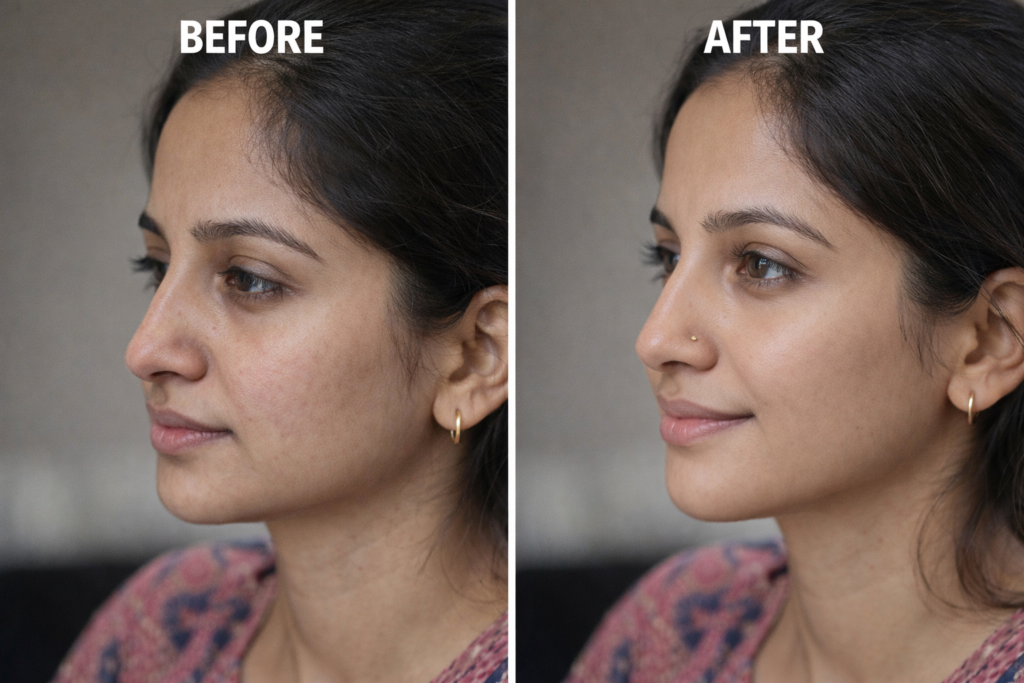
Common Patterns of Nasal Depression
We categorize and treat various structural patterns at our Centre for Advanced Rhinoplasty:
- Low Nasal Bridge / Flat Profile: A naturally low-set bridge that lacks definition and can make the face appear less balanced.
- Saddle Nose (Bridge Collapse): A distinct "sink" or indentation in the middle of the nose, often caused by a weakened or damaged septum.
- Post-Trauma Depression: Structural sinking resulting from a past nasal fracture or injury that did not heal with proper alignment.
- Secondary/Revision Depression: A "collapsed" appearance occurring after a previous rhinoplasty where too much structural support was removed.
- Weak Cartilage Support: Soft or thinning cartilage that leads to an indented bridge or a drooping nasal tip.
The Functional Impact: Why Support Matters
A depressed bridge isn’t just a “sunken” look; it represents a weakened “roof” for your airway. As ENT-led specialists, we evaluate how this depression affects your nasal airflow. If the internal framework is weak, you may experience:
❌ Chronic nasal congestion or “stuffiness.”
❌ Persistent mouth breathing and snoring.
❌ Reduced exercise tolerance due to limited oxygen intake.
The Microcare Clinical Approach
We don’t just “mask” the depression with fillers. Our Research-Driven Approach involves rebuilding the nasal architecture using Structural Rhinoplasty. We restore bridge height while reinforcing the internal valves, ensuring your nose remains strong, stable, and functional for a lifetime.

Augmentation Means Structural Restoration—Not Just Volume with Fillers
Building a Foundation for a Lifetime of Beauty and Breathing
When treating a depressed or sunken nasal bridge, it is vital to understand that your nose is a three-dimensional architecture, not just a surface to be “filled.” At Microcare ENT Hospital & Research Institute Centre for Advanced Rhinoplasty & Functional Nose Surgery, we focus on Nasal Bridge Augmentation in Hyderabad that provides a permanent structural solution rather than a temporary aesthetic mask.
The Goal of Surgical Restoration
For patients with a low bridge or saddle nose, the objective is to rebuild the internal framework to achieve:
- Optimal Bridge Height & Shape: Creating a sleek, elegant profile that perfectly balances your facial features.
- Strong Tip Support: Preventing the nasal tip from drooping or "diving" when you smile.
- Airway Stability: Reinforcing the internal nasal valves to ensure your breathing remains clear and unobstructed.
- Airway Stability: Reinforcing the internal nasal valves to ensure your breathing remains clear and unobstructed.
Restoration vs. Camouflage: The Reality
Many patients consider non-surgical “fillers” as a quick fix, but there is a significant difference in the medical outcome:
- Non-Surgical Fillers (The "Temporary" Approach): While quick, fillers only provide temporary volume. They cannot support a collapsed bridge, have limited control over precise contouring, and carry risks of migration or skin complications. Most importantly, fillers do not fix breathing problems caused by structural collapse.
- Surgical Augmentation Rhinoplasty (The "Permanent" Solution): This Advanced Functional Rhinoplasty creates a stable, lifelong framework. By using structural grafting, we can precisely sculpt the nose while simultaneously correcting deviated septums or internal obstructions.
The Microcare ENT Advantage
As a Centre for Advanced Rhinoplasty, we don’t just “add volume.” We perform a clinical airway assessment to ensure that your new bridge height actually improves your breathing. We use the latest microsurgical techniques to ensure your augmentation is stable, safe, and biologically harmonious.
Who is Depressed Nose Augmentation For? (Ideal Candidates)
Identifying Your Path to Structural Restoration
Many patients with a low bridge believe their concern is purely aesthetic, but a “sunken” appearance is often the external sign of internal structural weakness. At the Microcare Centre for Advanced Rhinoplasty, we evaluate both the visual profile and nasal airflow to determine the best surgical approach for you.
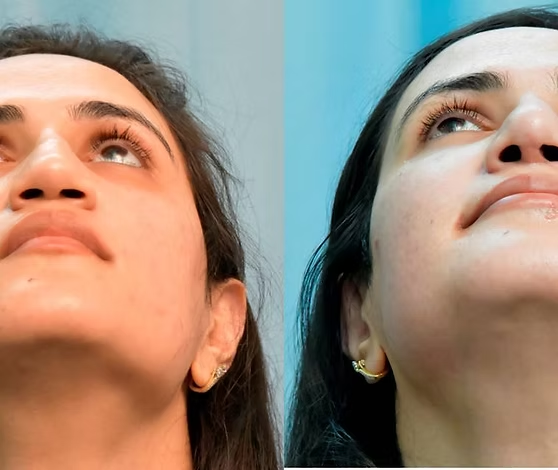
You May Benefit from Augmentation If You Have:
- A Low or Flat Nasal Bridge: Your bridge lacks definition and doesn't match your other facial features, often making the face appear broader or less balanced.
- A Visible "Dip" or Saddle Nose: You notice a distinct indentation or "sink" in the middle of your bridge, whether viewed from the front or in profile.
- Post-Injury Bridge Depression: Your nose has "sunk" or shifted following a past nasal fracture or trauma that wasn't properly aligned.
- Prior Rhinoplasty with Bridge Collapse: You have had a previous nose surgery elsewhere that resulted in a "scooped" or weakened appearance over time.
- Breathing Issues & Internal Weakness: You struggle with persistent nasal congestion or snoring, often caused by a deviated septum or collapsed internal valves.
The Microcare Evaluation Process
We don’t just look at the surface. As ENT-led specialists, we perform a clinical assessment to see if your “flat bridge” is also causing nasal valve collapse. Our goal is to rebuild the bridge height while reinforcing the internal framework for a lifetime of healthy, easy breathing.
How We Build the Bridge: The Science of Structural Restoration
Advanced Functional + Aesthetic Augmentation Techniques
Rebuilding a depressed nasal bridge is one of the most technically demanding procedures in modern rhinoplasty. At Microcare ENT Hospital & Research Institute Centre for Advanced Rhinoplasty & Functional Nose Surgery we don’t just “add height”—we reconstruct the nasal architecture. Our approach is customized based on your specific skin thickness, the degree of bridge deficit, and your functional breathing requirements.
Our Core Surgical Techniques
As a Centre for Advanced Rhinoplasty, we utilize a multi-layered protocol to ensure a natural look and lifelong stability:
- Precision Dorsal Augmentation: This involves meticulously building the height and smoothness of the nasal bridge. We ensure the new profile transitions seamlessly from the forehead to the tip, eliminating any "sunken" or "scooped" appearance.
- Precision Dorsal Augmentation: This involves meticulously building the height and smoothness of the nasal bridge. We ensure the new profile transitions seamlessly from the forehead to the tip, eliminating any "sunken" or "scooped" appearance.
- Integrated Tip Support Refinement: A higher bridge requires a properly projected tip. We refine the nasal tip to match your new bridge height, preventing a "heavy" or drooping appearance and ensuring facial harmony.
- Internal Airway & Valve Correction: For patients with nasal valve collapse—common in depressed noses—we reinforce the lateral walls of the nose. This prevents the nostrils from "caving in" during deep inhalation, significantly improving airflow.
The Gold Standard in Grafting Materials
To achieve a result that feels, looks, and moves like a natural nose, the choice of material is critical. Our ENT-led specialists prioritize biological harmony:
- Autologous Cartilage Reconstruction (Preferred): We primarily use your own living tissue—typically septal, ear, or rib cartilage. This is the "Gold Standard" for stability, as it integrates perfectly with your body, has the lowest risk of infection, and provides a lifetime of structural support.
- Anatomy-Specific Augmentation: Depending on your case type and skin quality, we may utilize specialized grafts (like diced cartilage in fascia) to create a smooth, refined bridge that remains soft to the touch while being internally strong.
The Microcare Clinical Edge
By performing these procedures in a dedicated Hospital Operation Theatre, we utilize microsurgical instruments and high-definition imaging to ensure every graft is placed with sub-millimeter precision.

Dr. Sriprakash Vinnakota
MS ENT, HEAD & NECK
CHIEF RHINOPLASTY SURGEON
26+ years of Experience
The ENT Advantage: Why Specialized Expertise Matters in Rhinoplasty
A successful rhinoplasty must achieve a delicate equilibrium between form and function. Because the nose is primarily a complex respiratory organ, the specialized training of an ENT (Otolaryngology) Surgeon provides a distinct advantage in ensuring long-term surgical success.
A successful rhinoplasty must achieve a delicate equilibrium between form and function. Because the nose is primarily a complex respiratory organ, the specialized training of an ENT (Otolaryngology) Surgeon provides a distinct advantage in ensuring long-term surgical success.
At Microcare ENT, Center for Advanced Rhinoplasty & Functional Nose Surgery, our surgical philosophy is rooted in the following four pillars of ENT expertise:
Why Choose an ENT Hospital for Depressed Nose Augmentation?
The Gold Standard for Structural Restoration and Patient Safety
Rebuilding a “sunken” or collapsed bridge requires more than just adding volume; it requires a deep understanding of nasal mechanics. Choosing an ENT-led hospital ensures your augmentation is built on a foundation of health and structural stability.

The Microcare Clinical Pillars
1. The ENT Edge (Function First) | 2. Hospital & Research Institute Setup | 3. Long-Term Stability Approach |
Airway Mastery: We specialize in the internal respiratory framework. While we elevate your bridge, we simultaneously correct nasal valve collapse and septal deviations. | Advanced Safety: Our NABH-accredited hospital provides 24/7 anaesthesia readiness, sterile OTs, and superior post-op monitoring that boutique clinics cannot match. | Structural Integrity: We don’t use “quick-fix” fillers. We use structural grafting (Septal, Ear, or Rib cartilage) to prevent future collapse and ensure your results last a lifetime. |
Scientifically Driven Precision
As a Research Institute, our surgical protocols for Depressed Nose Augmentation in Hyderabad are governed by clinical data. We utilize microsurgical instruments and high-definition imaging to ensure every graft is placed with sub-millimeter accuracy. This scientific rigor results in:
- Minimized Tissue Trauma: Faster healing and reduced swelling.
- Biological Harmony: Using your own tissue reduces the risk of infection or rejection.
- Predictable Outcomes: A bridge that remains stable and beautiful as you age.
The Microcare Safety Promise
At our KPHB and Jubilee Hills centres, your surgery is performed in a full-scale surgical theatre. This means you have the backing of a complete medical team, ensuring that your journey to a more confident profile is supported by the highest levels of Indian medical standards.
Recovery Timeline: What to Expect
The Science of Healing and Structural Refinement
Healing after Depressed Nose Augmentation is a biological process of integration. Because we use structural grafting to rebuild your bridge, your body needs time to stabilize the new framework while the swelling progressively subsides.
The Phases of Your Transformation
- Week 1: The Initial Stabilization
- This is the most critical phase. You will wear a protective external splint to keep the new bridge height secure. Expect some initial swelling and congestion, similar to a heavy cold. At Microcare ENT Hospital, we typically remove the splint and sutures by day 7.
- Weeks 2–3: Socially Presentable
- The majority of visible bruising and “heavy” swelling fades during this window. Most patients feel confident returning to work and social activities, as the new, elevated profile begins to emerge clearly.
- Weeks 6–12: The Major Refinement Phase
- As the internal tissues heal, the “thick” surgical swelling dissipates. This is when the fine contours of your nasal bridge and tip become more defined. Your breathing will continue to feel clearer as internal inflammation settles.
- Months 6–12: Final Definition & Stability
- The final results of your Functional + Aesthetic Augmentation are achieved. The grafts have fully integrated with your nasal architecture, providing the long-term structural stability required for a lifetime of beauty and health.
The Microcare Recovery Protocol
As a Centre for Advanced Rhinoplasty, we provide every patient with a scientifically-backed aftercare plan. This includes specific instructions on:
- Head Elevation: To minimize initial swelling.
- Activity Management: When to resume exercise without risking your new bridge.
- Internal Cleaning: To ensure your improved airway heals without obstruction.
Depressed Nose Augmentation Cost in Hyderabad
Transparent Pricing for Structural Restoration
The investment for rebuilding a sunken or flat nasal bridge is determined by the anatomical complexity of the case. Because we are a Specialised ENT Hospital, our pricing reflects a comprehensive medical approach that includes both aesthetic refinement and functional airway correction.
Key Factors Influencing Your Treatment Plan
During your clinical evaluation at our Hyderabad Centre for Advanced Rhinoplasty, your surgical cost will be calculated based on:
- Severity of Bridge Deficit: The volume of augmentation required to achieve a natural, balanced profile.
- Need for Septoplasty / Functional Correction: If your surgery includes straightening a deviated septum or correcting nasal valve collapse to improve breathing.
- Primary vs. Revision Case: Initial surgeries are generally more straightforward, while Revision Rhinoplasty (correcting a previous surgery or severe trauma) requires advanced microsurgical expertise.
- Surgical Technique & Grafting: The choice of material—such as using your own septal, ear, or rib cartilage—to ensure long-term structural stability.
Financial Support & Insurance Benefits
Unlike purely cosmetic procedures, Functional + Aesthetic Rhinoplasty may offer financial advantages:
📝 Insurance & TPA Support: If your bridge augmentation involves a medically necessary breathing correction, you may be eligible for insurance coverage for the functional portion of the surgery. Eligibility depends on your specific policy terms and clinical documentation.
💳 Flexible Payment Options: To make world-class ENT-led healthcare more accessible, EMI options may be available through our financial partners.
Get Your Personalized Cost Estimate
The most accurate way to understand your surgical investment is through a professional assessment. Following a review of your profile and airway health, our team will provide a transparent, all-inclusive breakdown.
Frequently Asked Questions (FAQs): Understanding Rhinoplasty
Is Depressed Nose Augmentation Permanent?
The Science of Lifelong Structural Stability
For many patients in Hyderabad, the primary concern is whether their new nasal profile will “sink” or change over time. At the Microcare Centre for Advanced Rhinoplasty, our surgical philosophy is built on permanence through structural integrity.
A Permanent Solution vs. Temporary Camouflage
Unlike non-surgical liquid rhinoplasty (fillers), which the body eventually absorbs, Surgical Augmentation Rhinoplasty is designed to be a one-time, lifelong correction. When the bridge is rebuilt using structural grafting, the results are biologically integrated into your nasal anatomy.
Factors That Ensure Your Results Last a Lifetime
As an ENT-led Research Institute, we utilize advanced protocols to ensure your depressed nose correction remains stable for decades:
- Autologous Tissue Integration: We prioritize using your own septal, ear, or rib cartilage. Because this is living tissue from your own body, it establishes a permanent blood supply and effectively “bonds” with your existing nasal framework.
- Structural Reinforcement: We don’t just “stack” volume on the bridge. We reinforce the nasal valves and septum, ensuring the “foundation” of your nose can support the new bridge height without shifting or collapsing as you age.
- Advanced Fixation Techniques: Using microsurgical precision, grafts are securely anchored to the underlying bone and cartilage, preventing the migration or warping often seen in less specialized clinics.
- Protection Against “Aging Droop”: By strengthening the nasal tip and bridge simultaneously, we prevent the natural “nasal tip ptosis” (drooping) that can occur over time, keeping your profile youthful and refined.
The Final Outcome
While initial surgical swelling takes 6 to 12 months to fully resolve, the underlying structural changes are permanent. Once your nose has reached final definition, your improved nasal airflow and aesthetic profile are built to last a lifetime.
Will My Nose Look “Too High” or Artificial?
The Art of Natural Facial Proportions
A primary concern for patients seeking Nasal Bridge Augmentation in Hyderabad is the fear of an “artificial” or “stiff” appearance. At the Microcare Centre for Advanced Rhinoplasty, our surgical philosophy rejects the “one-size-fits-all” approach. We believe that the best rhinoplasty is the one that no one notices.
How We Prevent the “Artificial” Look
Achieving a natural result requires a deep understanding of craniofacial proportions. We avoid the “too high” look through three key clinical strategies:
- Anatomical Ratio Mapping:
We don’t just add height; we calculate the ideal Nasofrontal Angle (where the nose meets the forehead) and the Nasofacial Angle. By respecting these biological landmarks, the new bridge appears to emerge naturally from your existing facial structure. - Customized Graft Sculpting:
Instead of using rigid, pre-formed implants that can look “stuck on,” our ENT specialists hand-sculpt your own autologous cartilage (septal, ear, or rib). This allows us to taper the edges of the graft so they blend seamlessly into your nasal bones, preventing visible “ridges” or a harsh, robotic profile. - Skin Envelope Consideration:
The thickness of your skin determines how much “height” the bridge can safely support. We assess your soft tissue envelope to ensure the augmentation provides definition without putting undue tension on the skin, which maintains a soft, natural feel to the touch.
The “ENT-Led” Aesthetic Advantage
Because we are a Research-Driven ENT Institute, we prioritize Structural Rhinoplasty. By reinforcing the internal valves and septum, we ensure the nose doesn’t just “look” higher—it functions as a strong, stable respiratory organ. This internal support prevents the “pinched” or “collapsed” look that often characterizes poor cosmetic surgery.
The Final Reveal
While initial swelling may make the bridge appear slightly higher in the first few weeks, the refined profile settles into its permanent, natural position as the tissues heal. By 6 to 12 months, your nose will have a soft, feminine, or balanced masculine contour that looks like the nose you were meant to have.
Can Nasal Augmentation Also Fix Breathing Problems?
The Crucial Link Between Bridge Height and Airflow
yes. In fact, for many patients with a depressed or “saddle” nose, augmentation is a medical necessity to restore proper respiratory function. At the Microcare Centre for Advanced Rhinoplasty, we don’t just “fill” a sunken bridge; we reconstruct the nasal “roof” to ensure your internal airways are wide and stable.
How Augmentation Improves Your Breathing
A depressed nasal bridge often signifies a weakened internal framework. By performing Functional + Aesthetic Augmentation, our ENT-led specialists address three critical respiratory factors:
- Internal Nasal Valve Support:
The internal nasal valve is the narrowest part of your airway. When the bridge is low or collapsed, these valves often “cave in” during inhalation. Structural Augmentation reinforces these side walls, preventing collapse and allowing for deep, silent breathing. - Septal Alignment & Foundation:
A sunken bridge is frequently caused by a deviated or damaged septum. As a specialised ENT Hospital, we straighten the internal septal “wall” while simultaneously using it as a pillar to elevate the external bridge, solving chronic congestion and snoring in one step. - Restoring Airway Volume:
A “flat” nose often has a reduced internal volume. By increasing the height of the bridge using autologous cartilage grafts (septal, ear, or rib), we effectively expand the internal space, reducing resistance and improving overall nasal airflow.
The Danger of “Cosmetic-Only” Fillers
It is vital to note that non-surgical fillers do not fix breathing problems. While they may temporarily mask a “dip” on the outside, they add weight to an already weak structure without providing any internal support. In some cases, fillers can even worsen an airway obstruction by putting pressure on the nasal valves.
The Microcare Integrated Approach
Because we operate within a Research-Driven Hospital Environment, we utilize high-definition nasal endoscopy to map your airway before surgery. Our goal is a Dual-Action Success:
- ✔ Aesthetic Success: A sleek, refined, and natural bridge profile.
- ✔ Functional Success: Effortless breathing, reduced sinus pressure, and improved sleep quality.
What is the Downtime After Augmentation Rhinoplasty?
The Science of Healing and Structural Integration
“Downtime” is more than just resting; it is the critical period where your body integrates the new structural grafts into your nasal framework. While the initial recovery is relatively quick, the final refinement of your nasal bridge and tip occurs in progressive stages.
The Recovery Milestones: A Step-by-Step Timeline
- Days 1–3: The “Head-Cold” Phase
The first few days are focused on managing initial swelling and congestion. You may feel a sensation of “fullness” or pressure, similar to a heavy sinus cold. Most patients at Microcare ENT Hospital manage this comfortably with prescribed medications and head elevation. - Day 7: The “Reveal” Milestone
This is the most significant day of your downtime. Your external nasal splint and sutures are typically removed at our KPHB or Jubilee Hills hospital. Once the splint is off, you will see the first clear outline of your elevated bridge. - Days 10–14: Returning to Work & Social Life
By the end of the second week, major bruising and visible “surgical” swelling have usually faded. Most patients are socially presentable and feel confident returning to the office or university. Residual swelling is often subtle enough that it is not noticeable to others. - Weeks 3–6: Resuming Physical Activity
You can gradually return to light exercise and non-contact sports. However, we advise avoiding heavy lifting or high-impact activities to protect the newly augmented bridge while the internal tissues continue to bond. - Months 6–12: Final Structural Definition
While you are back to your full routine, the internal healing continues. This is when the “fine-tuning” happens—the nasal skin shrinks back over the new bridge height, revealing the crisp, permanent definition of your refined profile and improved airway.
Why Microcare Patients Recover Faster
As a Specialised ENT Research Institute, we utilize microsurgical instruments and structural grafting (using your own cartilage). This precision minimizes unnecessary tissue trauma, which directly results in:
- ✔ Reduced Bruising: Compared to traditional “reductive” techniques.
- ✔ Faster Airway Clearance: Due to our expert management of internal nasal valves.
✔ Predictable Healing: Because we operate in a sterile, NABH-accredited hospital environment.
Is it Safe in Revision Cases?
The Science of Reconstructive Safety and Structural Salvage
Revision surgery is inherently more complex than a primary procedure due to the presence of scar tissue and a potentially compromised nasal framework. However, in a specialised ENT hospital environment, revision augmentation is not only safe but often essential to restore both nasal aesthetics and respiratory health.
How Microcare Ensures Safety in Revision Surgery
As a Centre for Advanced Rhinoplasty, we utilize a “Safety-First” reconstructive protocol to manage the unique challenges of a secondary nose job:
- Advanced Airway Mapping:
Before any revision, we use high-definition nasal endoscopy to assess internal damage. We identify nasal valve collapse or septal perforations that may have been caused by the previous surgery. - Structural Grafting (Autologous Tissue):
In revision cases, the original septal cartilage is often missing. We safely harvest ear or rib cartilage to rebuild a stable bridge. Because this is your own living tissue, it has the lowest risk of infection or rejection compared to artificial implants. - Microsurgical Scar Management:
Our surgeons use precision microsurgery to navigate through existing scar tissue. This protects the delicate blood supply to the nasal skin, reducing the risk of skin thinning or delayed healing. - Hospital-Grade Sterility & Support:
Revision cases are performed in our NABH-accredited operation theatres. Having full hospital-based anesthesia and 24/7 medical monitoring ensures a level of safety that “boutique” cosmetic clinics cannot provide.
The Goal of Revision Augmentation
The objective is “Structural Salvage”—rebuilding what was lost. We focus on:
- ✔ Restoring Bridge Height: Correcting a “scooped” or collapsed profile.
- ✔ Reinforcing the Airway: Fixing the breathing problems often left behind by purely cosmetic procedures.
- ✔ Long-Term Stability: Ensuring the nose does not undergo further “sinking” or deviation as it heals.
The Microcare Clinical Edge
With over 26 years of ENT surgical experience, our team understands the internal “plumbing” of the nose. We don’t just “fix the look”; we restore the respiratory foundation, making revision surgery a safe and life-changing solution for our patients.
What Are the Risks and Potential Complications?
Managing Safety Through Clinical Precision
Because the nose is a complex sensory and respiratory organ, complications are best avoided through ENT-led structural techniques. In expert hands, major risks are rare, but patients should be aware of the following:
Common & Temporary Side Effects
These are part of the natural healing response and typically resolve within the first 14 days:
- Post-Operative Swelling & Bruising: Most prominent around the eyes and bridge; managed with head elevation and icing.
- Temporary Nasal Congestion: Caused by internal mucosal swelling as the airway stabilizes.
- Minor Numbness: A temporary loss of sensation at the nasal tip or bridge that gradually returns as nerves heal.
Specific Risks of Bridge Augmentation
To provide a long-term result, we proactively manage these technical risks:
- Graft Displacement or Shifting: In rare cases, a graft may move slightly during the early healing phase. We minimize this at Microcare ENT Hospital by using internal fixation techniques and custom-sculpting your own cartilage.
- Graft Resorption or Warping: When using natural cartilage (especially rib), there is a small scientific possibility of the tissue changing shape. Our surgeons use advanced “balanced” carving methods to ensure the bridge remains straight and stable.
- Infection: While extremely rare in a sterile Hospital OT environment, any surgery carries a risk. We use prophylactic antibiotic protocols to ensure your safety.
- Skin Thinning or Irregularity: If the skin is very thin, the edges of a graft might become visible over time. We prevent this by using camouflage techniques (like perichondrium or fascia) to keep the bridge looking soft and natural.
The “ENT Safety” Advantage
Many purely cosmetic “complications” are actually functional failures, such as nasal valve collapse or worsened breathing. By choosing an ENT-Specialist Hospital, you significantly reduce these risks because we prioritize the internal respiratory framework alongside the external shape.
🛡️ Hospital-Grade Security: Performing surgery in a NABH-accredited hospital means we have 24/7 access to advanced imaging, emergency care, and senior anaesthesiologists, providing a safety net that “boutique” clinics cannot offer.
What is the Depressed Nose Augmentation Cost in Hyderabad
Transparent Pricing for Precision Reconstruction
While “cosmetic-only” clinics may offer flat-rate packages, a specialized ENT-led hospital treats every nose as a unique anatomical challenge. The final investment for your Nasal Bridge Augmentation in Hyderabad typically depends on four primary clinical factors:
- Surgical Complexity & Bridge Deficit
The amount of “lift” required dictates the surgical time and technique. Building a subtle feminine bridge differs from reconstructing a severe saddle nose collapse, which requires extensive internal support.
- Grafting Requirements (The “Gold Standard”)
To ensure a permanent, natural result, we prioritize autologous grafting (using your own tissue).
- Septal or Ear Cartilage: Often used for moderate augmentation.
- Costal (Rib) Cartilage: Required for major structural reconstruction or Revision Rhinoplasty, where a strong, large volume of support is needed.
- Functional + Aesthetic Integration
As a Specialised ENT Hospital, we often correct breathing issues simultaneously. If your surgery includes Septoplasty or Nasal Valve Repair, the cost reflects this dual-speciality expertise.
- Primary vs. Revision Surgery
Secondary cases (correcting a previous surgery from another clinic) involve navigating scar tissue and compromised anatomy, requiring the advanced microsurgical precision that our Research-Driven Institute provides.
Financial Support & Insurance Benefits
A unique advantage of choosing Microcare ENT Hospital is our status as a clinical medical facility:
- 📑 Insurance & TPA Coverage: If your bridge augmentation is medically necessary to fix a blocked airway or deviated septum, you may be eligible for insurance support for the functional portion of the procedure.
- 💳 EMI Options: To ensure world-class healthcare is accessible, we partner with financial providers to offer flexible monthly payment plans.
Can Insurance Cover Depressed Nose Augmentation?
Understanding the Medical Necessity of Structural Restoration
In the insurance industry, “cosmetic” procedures are typically excluded; however, functional nasal surgery—which corrects a physical obstruction or structural collapse—is often recognized as a medical necessity. At Microcare ENT Hospital & Research Institute, we provide the diagnostic documentation required to differentiate between “aesthetic choice” and “respiratory health.”
When is Coverage Typically Applicable?
For insurance or TPA (Third Party Administrator) support to be considered, the surgery must address a functional breathing impairment. Common scenarios include:
- Correcting a Deviated Septum: If your low bridge is caused by a deviated septum that blocks airflow, the Septoplasty portion of the surgery is often covered.
- Nasal Valve Collapse: A depressed bridge often leads to the collapse of internal valves. Rebuilding these valves to restore breathing is a recognized medical intervention.
- Post-Traumatic Reconstruction: If the depression resulted from a documented nasal fracture or injury, insurance may cover the reconstructive surgery to restore the nose to its pre-injury state.
- Chronic Sinusitis or Obstruction: Cases where structural nasal issues contribute to chronic infections or sleep apnea.
How the Process Works at Microcare
As a NABH-accredited hospital, we follow a rigorous clinical protocol to assist our patients with their claims:
- Diagnostic Endoscopy: We use high-definition imaging to document internal obstructions and “valve collapse” as medical evidence.
- Clinical Documentation: Our ENT specialists provide detailed reports explaining how the augmentation of the bridge is essential for maintaining airway stability.
- TPA Coordination: Our dedicated insurance desk works with major providers to facilitate the pre-authorization process for the functional components of your surgery.
The “Dual-Billing” Reality
It is important to note that insurance usually covers the functional (breathing) portion of the surgery. Any additional “aesthetic refinement” (purely for looks) remains an out-of-pocket investment. This “Integrated Approach” often significantly reduces the overall financial burden for the patient.
Watch our Related Videos
Explore Our Related Blogs
Medically Reviewed By:
Dr. Sriprakash Vinnakota, MBBS, MS ENT, Head & Neck
Rhinoplasty & Advanced Nose Surgery Specialist
Chief Rhinoplasty Surgeon with 26+ Years of Experience
Microcare ENT Hospital & Research Institute– Centre for Advanced Rhinoplasty & Functional Nose Surgery
Reviewed on: January 18, 2026